Have you ever approved a low ingredient quote, then spent days chasing paperwork or asking when the truck would arrive? A cheap order can become expensive fast.
One late load may stop production. One weak specification may change flavor, texture, or yield. One missing document may hold stock at receiving. That is why choosing a foodservice ingredients supplier takes more than comparing price per pound.
For US manufacturers, co-packers, beverage companies, institutional kitchens, and distributors, ethical sourcing starts with direct questions. Where did the product come from? Was it stored correctly? Does the paperwork match the lot? Did the supplier mention every known limitation before taking the order?
A dependable supplier answers without making the buyer dig. It also admits when information is incomplete.
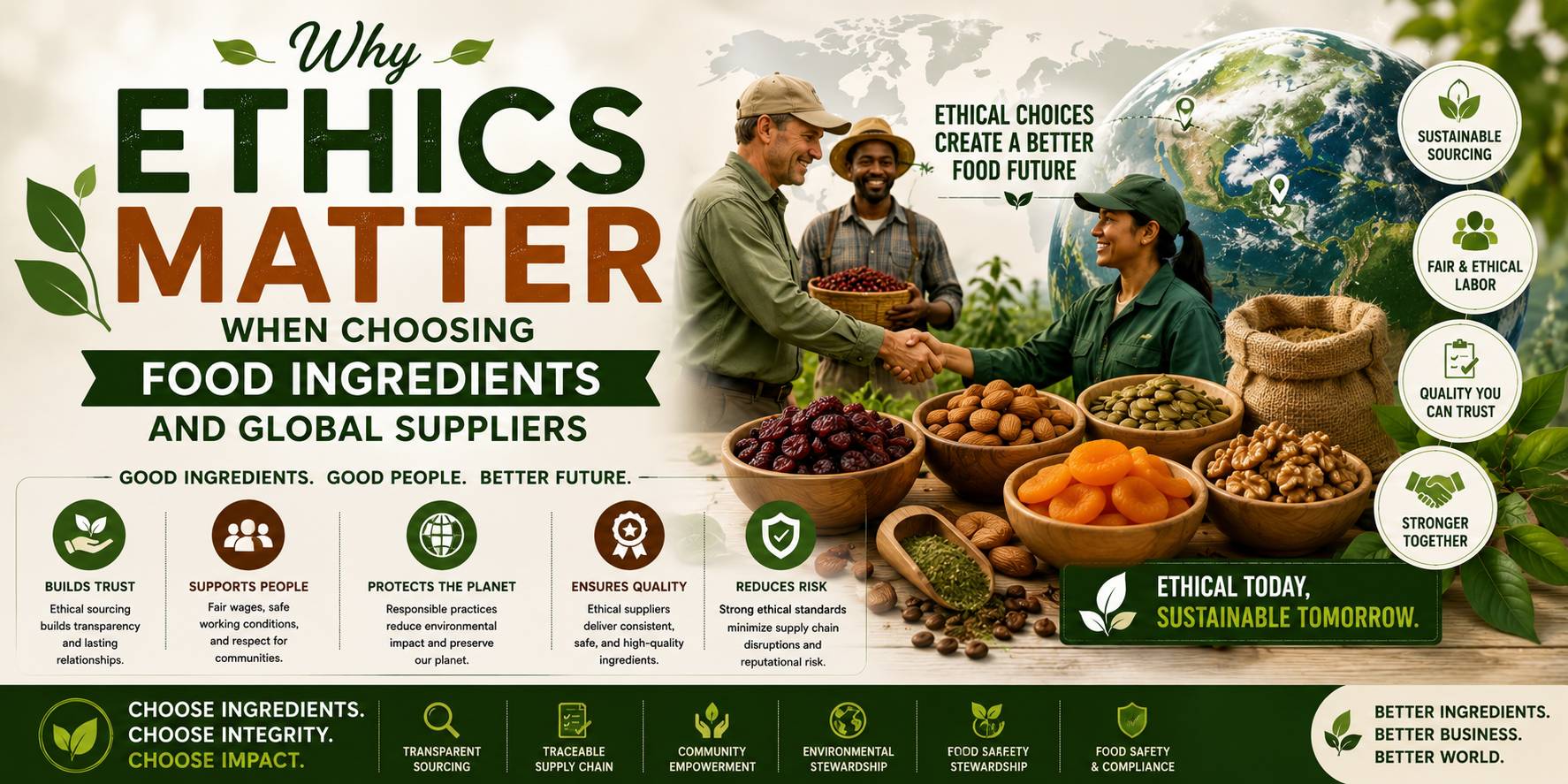
How Ethical Sourcing Shapes Industrial Food Ingredients Buying
Ethical buying affects receiving, production, inventory, waste, and customer complaints. Each supplier action has an operating result.
|
Supplier practice |
What it changes for the buyer |
|
Verified specifications |
Fewer rejected loads and formula changes |
|
Lot and origin records |
Faster complaint and recall checks |
|
Honest stock disclosure |
Better shelf-life planning |
|
Responsible labor standards |
Lower legal and brand exposure |
|
Early notice of changes |
More time to test or reschedule |
Reliable Quality Across More Than One Order
The first order can be perfect. The fifth order tells buyers more.
A specification should hold from lot to lot. That includes Brix, moisture, color, particle size, microbiological limits, packaging, and storage. Natural ingredients can vary, but the supplier should state the acceptable range before shipment.
In 2025, 82% of restaurant operators said food costs had increased, while only 6% reported a decline. With that pressure, buyers cannot afford hidden yield loss. A foodservice ingredients supplier should help teams compare usable output, not just the quoted price.
A cheaper puree may require more product per batch. A powder may clump. Frozen fruit may carry too much thaw loss. Those details decide the actual cost.
Documentation That Matches the Lot
General product sheets are useful, but they do not prove what shipped.
Buyers should request a certificate of analysis, allergen statement, origin record, organic certificate where relevant, safety data sheet, and facility approval. The lot number on the paperwork should match the pallet.
With industrial food ingredients, one document gap can hold a load at the dock. That delay then reaches labor schedules, production plans, and customer orders.
We often see buyers save time by requesting the document pack before payment, especially with a new source or one-time inventory. It is basic purchasing work, not extra paperwork.
Honest Answers During Supply Disruptions
Price jumps often push buyers toward unfamiliar sources. That can work, but rushed buying creates risk.
By June 2026, producer prices had risen 98.5% for fresh vegetables, 30.8% for unprocessed finfish, 24.3% for fats and oils, and 12.7% for beef and veal year over year. Moves like these can rewrite a purchasing plan in days.
When companies buy food ingredients in bulk in the USA, they should ask whether stock comes from regular production, excess output, a canceled order, packaging changes, or a short-dated lot. None of these reasons automatically makes the product unsuitable. The buyer simply needs the facts.
Six months of shelf life may work for an immediate run. It may not work for a seasonal program scheduled later. Timing changes the answer.
Fair Labor and Responsible Production
An ingredient may pass through farms, processors, warehouses, brokers, repackers, and freight companies before delivery. Each step adds another party and another possible gap.
Food companies should ask how suppliers review worker safety, labor conditions, subcontractors, and production sites. They should also ask what happens when a source fails a review.
No checklist removes every risk. Written expectations still make poor conduct harder to ignore. They also give buyers a basis for action when a concern appears.
Traceability From Source to Delivery
Traceability becomes urgent when a complaint arrives. The buyer needs to know which lot went to which customer, where it was stored, and whether another customer received stock from the same batch. A useful record trail links the purchase order, supplier lot, origin, warehouse, shipping document, and final delivery.
The USDA estimates that 30% to 40% of the US food supply is wasted. An earlier benchmark placed the amount near 133 billion pounds. Better lot control will not solve all food waste, but it can reduce disposal caused by poor rotation, uncertain shelf life, or oversized orders.
A supplier should not push two truckloads when the buyer can use one. Extra volume stops being a bargain once storage and spoilage enter the calculation.
Long-Term Value Comes From Fewer Surprises
The lowest quote does not always produce the lowest total cost.
Purchasing teams lose time chasing revised documents, checking delivery dates, or arguing over specifications. Production teams lose more when an ingredient behaves differently than expected.
An industrial food ingredients distributor earns repeat business by reducing those surprises. Sometimes that means saying a lot will not fit the application. Sometimes it means recommending a sample test, smaller quantity, or different pack size.
That conversation may slow one sale, but it often protects the relationship.
How Juice Deals Handles Ethical Global Ingredient Sourcing
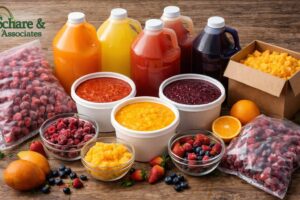
Juice Deals operates through Schare & Associates and works with food manufacturers, beverage producers, co-packers, distributors, institutional facilities, and other commercial buyers. We source fruit concentrates, purees, frozen fruit, sweeteners, cocoa, coffee, tea, food chemicals, canned products, meat, poultry, and related items.
We also buy and market excess inventory. Sellers gain another route for usable stock, while buyers can reach products that may not appear in regular catalogs.
Our work centers on a few buyer needs:
- Orders may range from one case or pail to several truckloads.
- We search for hard-to-find products instead of relying on one stock list.
- Weekly inventory offers may carry company-stated savings of up to 50%, depending on product, quantity, and availability.
- Our affiliated flavor house can support juice bases, flavor work, product matching, and beverage formulation.
We do not treat every inquiry as a truckload sale. Some buyers need trial quantities. Others need several loads on a schedule. As a bulk food ingredients supplier, beverage ingredient supplier, and excess food inventory buyer, we focus on product condition, paperwork, timing, quantity, and application fit.
What to Check Before You Buy Food Ingredients in Bulk USA
Start with the specification. Ask for grade, origin, pack size, storage requirement, shelf life, minimum order, lead time, testing records, and warehouse location.
Then ask who owns the stock and who carries responsibility if the lot fails the agreed specification.
For industrial food ingredients, request a sample whenever the item can change flavor, color, viscosity, texture, or stability. Test it under normal production conditions. A bench sample may look fine, while a full run reveals separation, scorching, color shift, or flavor loss. Also confirm that the sample came from the same lot you will receive.
Surplus stock needs another review. Ask why it became available. Overproduction, canceled orders, label changes, and forecasting errors are common reasons. The buyer still needs storage history, remaining shelf life, packaging condition, lot records, and title to the goods.
A bulk food ingredients supplier should answer those questions before payment. A beverage ingredient supplier should also discuss application behavior. An excess food inventory buyer should apply the same care when purchasing stock.
Finally, calculate the full cost. Include freight, testing, yield, labor, storage, waste, and rejection risk. Price per pound tells only part of the story.
Conclusion: Build a Better Ingredient Supply Chain
Ethical sourcing affects quality, timing, traceability, labor exposure, waste, and customer service. The right foodservice ingredients supplier will discuss product limits as openly as product benefits.
When you need bulk ingredients, difficult-to-source items, or a responsible route for excess stock, contact our team. We can review the specification, check suitable inventory, and help you order the quantity that fits your operation.
FAQs
How can a buyer check whether a food ingredient supplier is legitimate?
Review business records, warehouse details, references, product documents, payment terms, and sample availability.
What should buyers ask about imported food ingredients?
Ask about origin, customs status, FDA requirements, testing, storage conditions, and remaining shelf life.
Can surplus ingredients still meet commercial standards?
Yes. Buyers should verify lot records, packaging, storage history, test results, and expiry information.
How should a company test a new bulk ingredient?
Approve the documents, test a sample, run a production trial, and review the finished product.
Why do food businesses sell excess inventory?
Common reasons include overproduction, canceled orders, packaging changes, forecasting errors, and slow-moving stock.