
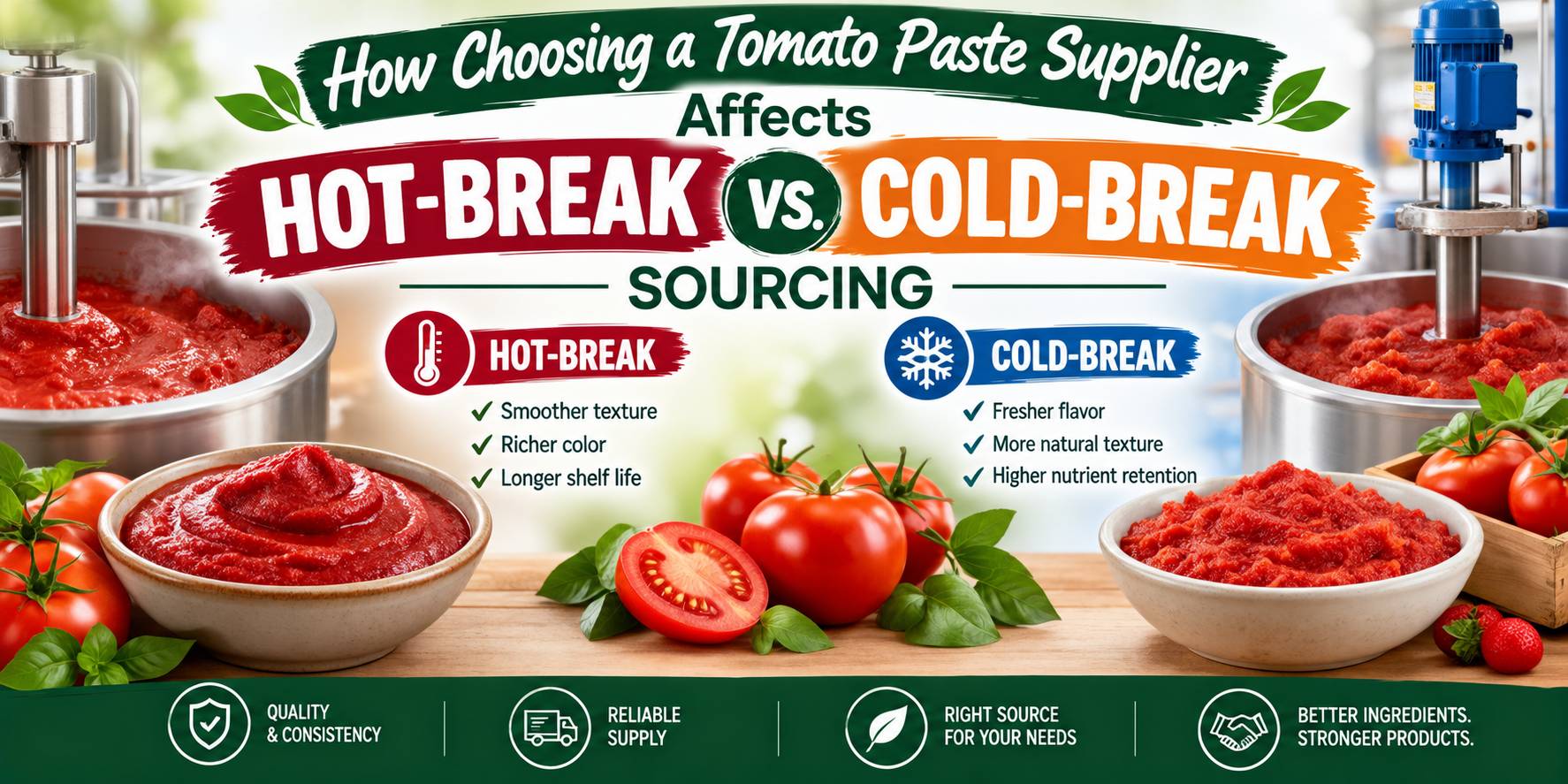
Have you ever approved a tomato ingredient on price, then watched your sauce lose body during production? Your tomato paste supplier influences more than purchasing costs. Product selection, specifications, and packaging shape how an ingredient performs in your process. Hot-break and cold-break paste can serve different formulation goals, even when their concentration looks similar. The buying decision starts with your finished product: how it should pour, coat, taste, and hold together after processing.
Hot-Break vs. Cold-Break Tomato Paste: Processing and Product Differences
The distinction begins after crushing. Tomato enzymes attack pectin, a structural component that contributes to body. Hot-break processing uses heat to limit that enzyme activity and preserve viscosity. Cold-break processing allows more pectin breakdown, which tends to produce a thinner paste at comparable solids.
That difference carries into your formulation. However, break type cannot predict every outcome. Tomato variety, concentration, finishing, and subsequent processing influence performance.
|
Buying consideration |
Hot-break paste |
Cold-break paste |
|
Texture tendency |
Greater body at comparable solids |
Lower viscosity at comparable solids |
|
Application direction |
Thick sauces and ketchup |
Products requiring easier flow |
|
Approval priority |
Check coating and pumping behavior |
Check flow and separation |
Treat these tendencies as screening criteria. Test samples in your recipe before selecting industrial tomato paste for production.
Do not assume a texture change requires more paste. Increasing concentration also changes tomato flavor and the recipe’s balance. Diagnose whether the problem comes from solids, pectin condition, or your mixing process before changing quantities.
How Your Tomato Paste Supplier Supports Production Requirements
An ingredient specification connects the purchasing team with the production floor. It should describe the attributes your process needs, the tests that measure them, and the limits your team accepts. Without that agreement, buyers risk approving a product that meets the quote but misses the formulation target.
Matching Paste Viscosity to Sauces, Soups, and Beverage Formulations
Start with the finished product’s flow requirements. A pizza sauce needs coating ability; a beverage base needs a different balance of suspension and pourability. Ask your tomato paste supplier for Bostwick results with the test temperature, dilution, and procedure. A lower flow distance indicates greater consistency under comparable conditions. Compare samples after your own mixing and heating cycle, since the production process can change texture.
Comparing Brix Levels for Recipe Yield and Ingredient Costs
Brix helps buyers compare soluble solids, but it does not measure thickness. USDA specifies at least 24% natural tomato soluble solids for paste and classifies medium concentration as 28% to under 32%.
Compare bulk tomato paste quotes on delivered solids cost, then account for usable yield and formulation performance. A cheaper pound may deliver fewer solids. A concentrated option may require different dilution and mixing procedures.
Checking Product Specifications for Batch Consistency
Set acceptance ranges for color, acidity, soluble solids, consistency, and defects. Request lot documentation and agree on how both parties will address deviations.
USDA Grade A requires at least 90 out of 100 points, alongside flavor, odor, color, and defect requirements. That benchmark supports purchasing discussions, but it cannot replace application trials. Match incoming results against an approved reference sample to identify changes before they disrupt production.
Choosing Drums, Bins, or Cans to Fit Storage and Handling
Packaging changes the work around the ingredient. Check unloading access, lifting equipment, dispensing methods, and the amount your team can consume after opening. A large container can reduce handling frequency while creating leftover product between batches.
Compare bulk tomato paste formats against actual batch sizes. Ask about liner construction, closure integrity, storage conditions, and package disposal before calculating the handling cost of each option.
Matching Order Quantities to Production Volume
A wholesale tomato paste supplier should explain minimum quantities, available formats, and purchasing terms before you commit. Base order volume on production demand and stock rotation, not the attraction of a larger discount.
At JuiceDeals, we help buyers locate existing ingredients and explore new sources. For each inquiry, buyers should confirm the available quantity and specifications before treating an alternative source as an approved replacement.
Confirming Availability and Lead Times Before Scheduling Production
Separate listed products from inventory available for your order. Request confirmation of the shipping location, dispatch timing, freight arrangements, and receiving requirements. Build your schedule around those details.
When sourcing industrial tomato paste, approve any proposed substitution through purchasing and quality teams. A matching product name does not establish equivalent consistency, packaging, or performance. Document the accepted lot and specifications before the order moves forward.
JuiceDeals’ Hot-Break and Cold-Break Tomato Paste Options
At JuiceDeals, we offer hot-break and cold-break tomato paste in drums, bins, and cans through Schare & Associates. These options give buyers a starting point for matching ingredient type and packaging to their production requirements. Each inquiry should establish the available specifications, quantities, and delivery terms.
- Broader tomato purchasing: The range includes diced tomatoes in juice, concentrated crushed tomatoes, whole-pack tomatoes, sauce, and ketchup.
- Sourcing experience: Schare & Associates began in 1997, following founder Keith Schare’s entry into the fruit concentrate business in 1992.
- Purchasing flexibility: General distribution services span a pail or case through multiple truckloads, with product-specific minimums requiring confirmation.
- Inventory support: Overstock purchasing and weekly deal emails create opportunities to sell surplus ingredients or evaluate available discounted stock.
The business serves commercial customers, including brokers, distributors, and co-packers. Its role centers on ingredient sourcing and distribution. Buyers can assess that support alongside the product documentation and trial results their operations require.
Questions to Ask Before Approving a Tomato Paste Order
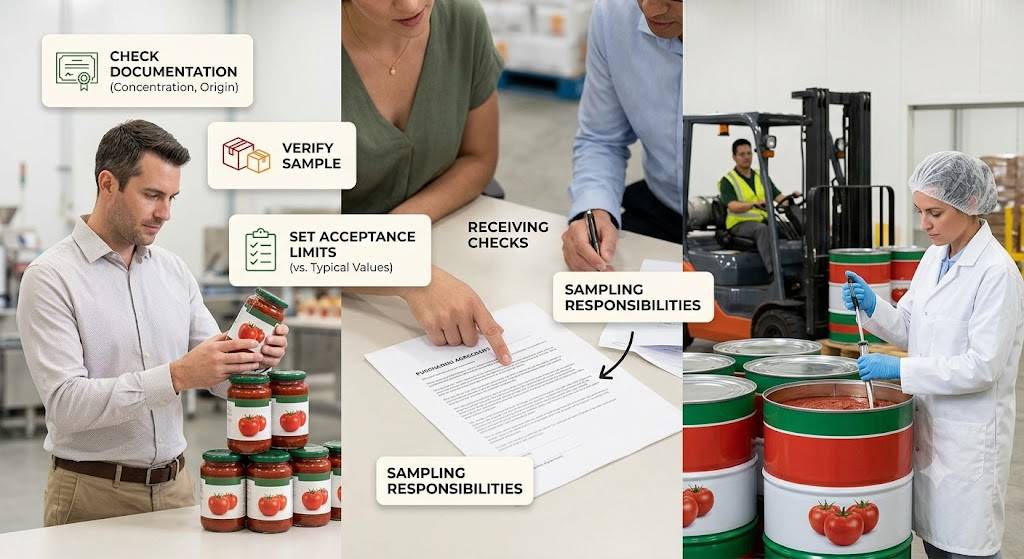
Does the quote identify break type, concentration, packaging, origin, and storage requirements? Does the sample represent the proposed supply? Who handles a rejected delivery, and what documentation supports that decision? Resolve these questions in the purchasing agreement. Verbal expectations leave room for disputes when production deadlines approach.
Ask your tomato paste supplier to distinguish release specifications from typical values. A typical result describes historical production; an acceptance limit defines what your order must meet. Put that distinction in writing before issuing the purchase order. Include receiving checks and sampling responsibilities in the purchasing agreement before each shipment.
Conclusion
Choose a tomato paste supplier around product performance, documented specifications, and handling requirements. Price belongs in that decision alongside usable yield and production fit. Share your formulation and packaging requirements with us, and we can review sourcing options for your next order.
FAQs About Tomato Paste Sourcing
Does hot-break mean aseptic?
No. Break type describes processing after crushing. Aseptic processing and packaging address a separate preservation system. Confirm both attributes.
Can tomato paste replace tomato puree?
It can in some formulations, but adjust water and solids, then test flavor, acidity, and texture before approving substitution.
Does cold-break paste require refrigerated shipping?
The name does not specify shipping conditions. Follow the product’s preservation method, packaging specifications, and supplier storage instructions.
Can I use tomato paste in an organic product?
Check ingredient certification and your finished product’s labeling requirements with your certifier. A conventional paste listing does not establish organic eligibility.
What causes tomato paste to darken?
Heat exposure, oxygen, and storage conditions can affect color. Investigate packaging integrity and handling history when a lot departs from your approved color standard.