
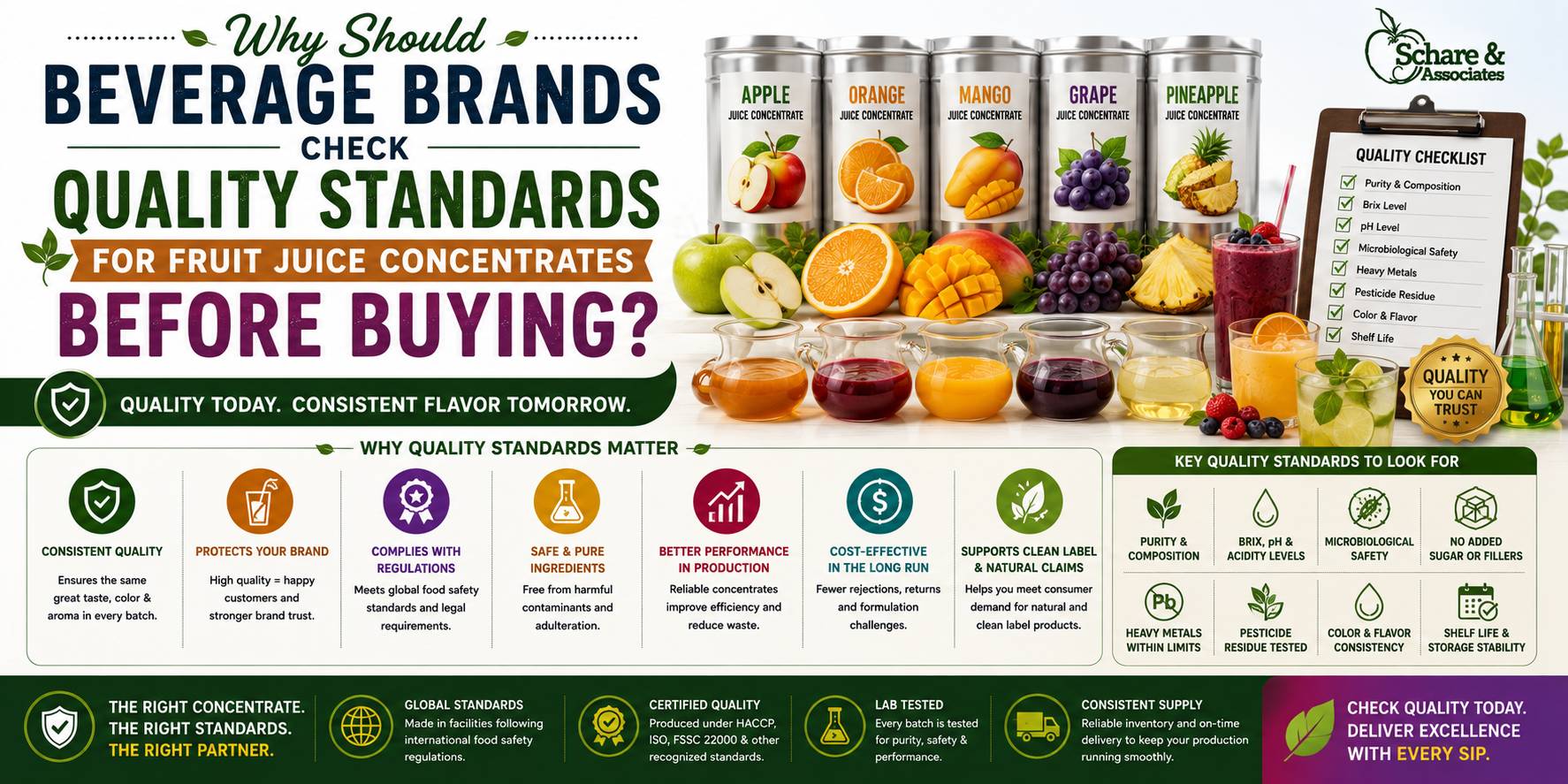
What if a concentrate looks right on the quote sheet, then causes trouble once production starts?
It happens. A good price and the right fruit name do not tell you how the ingredient will behave in a tank. Sweetness can drift. Acidity can change. Yield can miss the target. For teams asking where to buy juice concentrate in bulk, specifications, test results, storage instructions, traceability, and packaging deserve attention before volume approval.
The same caution applies to shelf-stable fruit juice concentrates. Shelf life depends on processing, Brix, acidity, packaging, and stated storage conditions. A supplier quote can start the buying process. It should not make the final decision.
Which Quality Checks Can Protect Beverage Quality, Shelf Life, and Production Costs?
A beverage plant buys more than fruit flavor. It buys solids, acidity, color, aroma, yield, and process behavior. Small shifts can move the whole formula, so measurable limits belong in the purchasing specification.
Check Brix Levels for Consistent Sweetness and Formulation Accuracy
Brix shows soluble solids in the concentrate. Sugars make up much of the reading, although acids and minerals contribute too.
A low-Brix lot may force the plant to use more concentrate. A high reading can push sweetness or body past target. Teams deciding where to buy juice concentrate in bulk should compare target Brix, tolerance, test method, and lot results. Price per pound tells only part of the story. Check finished yield too.
A 2025 Cornell study found cranberry juice concentrated to 52.3°Brix through reverse and forward osmosis retained at least 87% of total phenolics and flavonoids during six months of refrigerated storage. Concentration method and storage conditions deserve attention besides the number itself.
Review Acidity and pH Before Finalizing a Beverage Recipe
Two concentrates can carry similar Brix and still taste quite different. Acidity shapes tartness, fruit character, preservation needs, and processing. pH can affect color stability and microbial control. When shelf-stable fruit juice concentrates go into long-life drinks or mixers, ask for normal pH and titratable acidity ranges.
Wide lot variation creates work. R&D may need to adjust acid, water, or sweetener with each shipment.
Examine Microbiological Specifications to Reduce Product Safety Risks
A good smell does not prove microbiological quality. Ask which tests appear on the certificate and how the supplier handles a failed lot.
The same Cornell cranberry concentrate remained microbiologically stable for six months. Total plate counts stayed below 1.5 log CFU/mL, with no yeast or mold detected. Those figures apply to that study, not every fruit concentrate.
For shelf-stable fruit juice concentrates, ask what processing step supports the stated shelf life and how the package protects the ingredient afterward.
Compare Color, Aroma, and Flavor Profiles Across Production Batches
Fruit changes with crop year, origin, maturity, processing temperature, oxidation, and storage. One approved sample should not become the sensory reference.
Check diluted concentrate for aroma, color, bitterness, cooked notes, fruit character, and finish. Keep retained samples for products where one fruit note leads the formula.
We look at the finished beverage application when helping customers source concentrate. A mixed fruit drink can tolerate different variation from a single-fruit drink, and the specification should reflect that.
Verify Storage Conditions for Shelf-Stable Fruit Juice Concentrates
Storage claims need specifics. These special concentrates may be stored at ambient temperature. Others require refrigeration or freezing.
Review the unopened shelf life, after-opening handling conditions, thawing instructions, and transport conditions for the particular SKU. Pails, drums, totes, and bag-in-box packs may come with different instructions.
Cold storage, thaw time, and partial-pack waste can erase a cheap purchase price. Treat storage as part of ingredient cost.
Check Product Traceability, Certifications, and Supplier Documentation
Request certificates of analysis, lot codes, allergen statements, origin, relevant certifications, and records per your quality system.
The traceability link should be established between the incoming concentrate and receiving records and finished beverage lots. Change notifications should be considered as well. If it were a different source, site, package, or specification, another review might be necessary.
For teams comparing where to buy juice concentrate in bulk, ask how rejected lots, replacements, and technical questions are handled before placing a large order.
How Juice Deals Helps Brands Decide Where to Buy Juice Concentrate in Bulk
Juice Deals works with beverage manufacturers looking for conventional, organic, common, and less common fruit concentrates. That range can help when a team is testing a formula, replacing a difficult source, or planning around seasonal supply.
We can support different purchasing volumes, from smaller cases and pails to commercial quantities. That gives product teams more room during trials and helps purchasing teams avoid taking on unnecessary stock before a formula earns full production.
A few sourcing strengths stand out:
- The range extends beyond concentrates into purees, blends, powders, extracts, natural colors, and related ingredients.
- We can help locate harder-to-source fruit ingredients when usual channels tighten.
- Affiliated flavor support can cover juice bases, fruit-type flavors, WONFs, and product matching.
The useful part is the fit. Fruit, pack size, specification, storage needs, and production volume should line up before the purchase moves forward.
What Should Beverage Brands Compare Before Approving a Concentrate Supplier?
Price belongs in the comparison, but technical and supply details deserve equal space.
|
Buying Factor |
What to Compare |
Why It Affects the Purchase |
|
Specification |
Brix, acidity, pH, sensory limits |
Changes formulation and yield |
|
Microbiology |
Plate count, yeast, mold, controls |
Affects release decisions |
|
Storage |
Temperature, shelf life, opened-pack rules |
Changes warehousing and waste |
|
Packaging |
Pail, drum, tote, bag-in-box |
Affects handling and freight |
|
Documentation |
COA, origin, traceability, certifications |
Supports approvals and audits |
|
Supply |
Lead time, order size, continuity |
Protects production schedules |
Brands buying shelf-stable fruit juice concentrates should also compare shortage response, substitution rules, rejected-lot procedures, and supplier change notifications. Those details become important once the plant books production.
Conclusion: Better Quality Checks Can Lead to More Reliable Beverage Production
Fruit concentrate buying works better when procurement, R&D, and quality teams use the same specification. Brix, acidity, microbiology, sensory limits, packaging, storage, and traceability all affect cost after the ingredient reaches the plant.
If your team is deciding where to buy juice concentrate in bulk, compare technical details before choosing on price alone. Apply the same care to shelf-stable fruit juice concentrates because storage life depends on the product, process, package, and handling instructions.
We help beverage teams source fruit concentrates across different varieties and volumes. Order with us to compare options against your production requirements.
FAQs
Can Juice Concentrate Be Used in Sparkling Drinks?
Yes. Test it with the final acid level, sweetener system, carbonation, and processing conditions first.
Is Frozen Concentrate Always Better Than Ambient-Stored Concentrate?
No. Storage capacity, freight, pack size, production schedule, and beverage process should guide the choice.
How Long Can an Opened Drum of Concentrate Stay Usable?
Follow the supplier’s opened-pack instructions for temperature, resealing, handling, and use period.
Can a Beverage Brand Mix Concentrates From Different Suppliers?
Yes, after specification, sensory, and production checks show the materials perform alike.
Which Concentrate Pack Size Works Best for a Pilot Run?
Smaller pails or cases often limit leftovers. Drums and totes suit larger repeat runs.