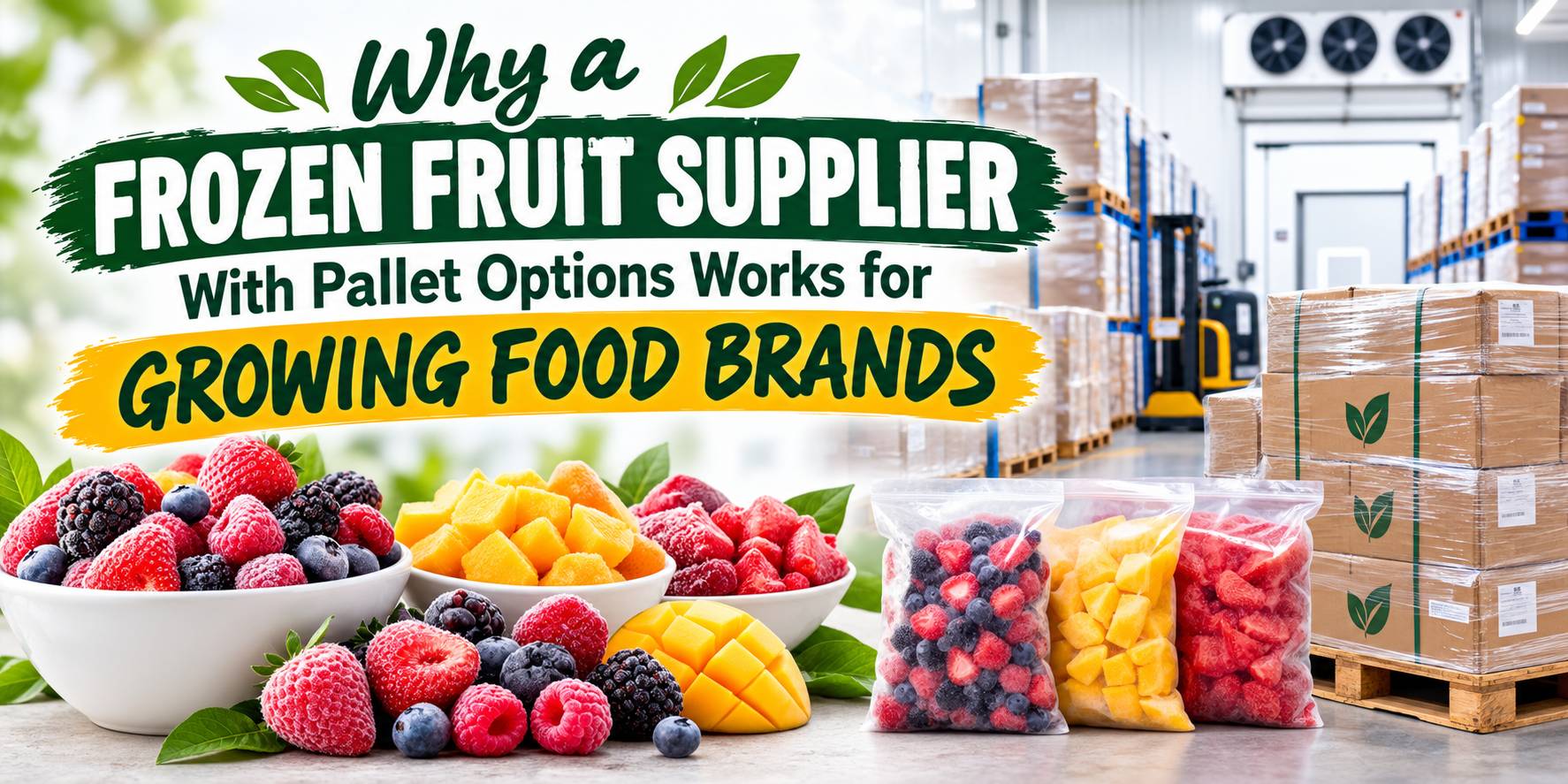
What happens when a food brand moves from a few trial batches to regular production and fruit usage starts climbing every month? Buying gets harder. A frozen fruit supplier may offer the right product, but growing brands also need workable pack sizes, storage plans, repeat availability, and an order quantity that does not strain cash flow. Teams that buy frozen fruit online face the same issue. Finding a product is easy. Building a purchasing routine around it takes more thought.
Pallet Buying Changes Production Planning
Small orders work during product testing because demand stays limited and production can adjust around available ingredients. That changes once a company adds retailers, foodservice accounts, or larger co-packing runs.
Pallet purchasing can fit better than repeated case orders at that stage. One larger purchase may cover several production cycles and reduce emergency reorders. It can also make forecasting clearer because teams know how much fruit enters storage at one time.
The benefit only appears when the brand knows its usage. A pallet that looks economical on paper can become expensive if much of it stays frozen for months. Procurement should compare weekly consumption, freezer space, expected sales, and reorder timing before committing to larger loads.
What Buyers Should Check Before Ordering Frozen Fruit
A product page can show fruit type and pack format, but commercial purchasing needs a deeper review. Buyers should confirm what the fruit will do inside the finished product, how much preparation it needs, and whether the supplier can provide the same specification again.
Before purchasing frozen fruit online, a food brand should check:
- Fruit variety and country of origin
- Whole, sliced, diced, puree, concentrate, or IQF format
- Case weight and pallet configuration
- Minimum order requirements
- Frozen storage needs
- Lead time and repeat availability
- Documentation required by the buyer or co-packer
Juice Deals states that buyers can purchase frozen fruit by the pallet, giving commercial buyers another option once small-volume ordering stops matching production needs.
That information should feed into a real cost comparison. The cheapest case price may not stay cheap after extra labor, repacking, wasted product, or rush orders enter the calculation.
Product Format Can Change Labor, Yield, and Batch Control
Fruit format often changes how production runs. A bakery using visible fruit pieces may prefer IQF berries because workers can portion them with less preparation. A beverage company may choose puree or concentrate when intact fruit texture is unnecessary. A sauce or filling producer may need another format based on solids, consistency, and processing equipment.
Buyers should judge a frozen fruit supplier on more than fruit variety. They need to know whether the available format matches the recipe and the production line.
Juice Deals also lists frozen fruit alongside purees, juice concentrates, and other food ingredients. A manufacturer using several fruit formats can reduce the number of separate sourcing conversations around one product line.
Teams searching for frozen fruit online should still request the details that affect production. Photos and product names do not replace specifications, pack information, or a clear discussion about recurring supply.
Why Pallet Quantities Can Improve Purchasing Control
Pallet purchasing works best when demand has become steady enough to predict. It gives procurement a clearer unit to plan around, especially when a company knows how many finished cases or batches one pallet can support.
A frozen fruit supplier that handles commercial quantities can also fit a repeatable ordering cycle. Instead of reacting each time inventory runs low, the company can set reorder points based on actual usage and delivery time.
Brands often miss this step while growing. Sales increase first, production follows, and purchasing keeps using the old routine. The result can be excess stock one month and a shortage the next.
For frozen fruit online orders, the same rule applies. Buyers need a reorder trigger, not just a rough idea of what remains in the freezer.
Larger Orders Need Coordination Across the Business
A pallet purchase affects more than the person placing the order. Operations needs receiving space. Production needs a usage plan. Finance needs to know how much cash will remain tied up in stock. Quality teams may also need documents before material reaches the production floor.
Growing brands should connect purchasing decisions with production forecasts instead of treating frozen fruit as a routine commodity. The better question is not, “Can the company buy this in bulk?” It is, “Can this quantity move through production at the right pace?” That distinction keeps larger orders useful instead of turning them into slow-moving inventory.
Conclusion
Pallet options can work well for food brands that have moved beyond trial production and now need a more stable buying pattern. The decision should start with usage, storage, product format, lead time, and cash tied up in inventory. When those factors line up, a frozen fruit supplier can support more controlled purchasing and fewer last-minute ingredient gaps. The same checks should guide any plan to buy frozen fruit online, especially when one order will cover several production runs.