Would you order the same carrot ingredient for a smooth soup and a rice blend that needs visible pieces?
The crop name tells purchasing only part of the story. Your mixer, filling equipment, and finished texture determine what arrives at the receiving dock. A vegetable ingredients supplier needs those details before discussing substitutions or price. Otherwise, a cheaper ingredient may require extra preparation, introduce unwanted water, or lose its shape during cooking. The sourcing decision starts with what production must preserve and what it needs to change.
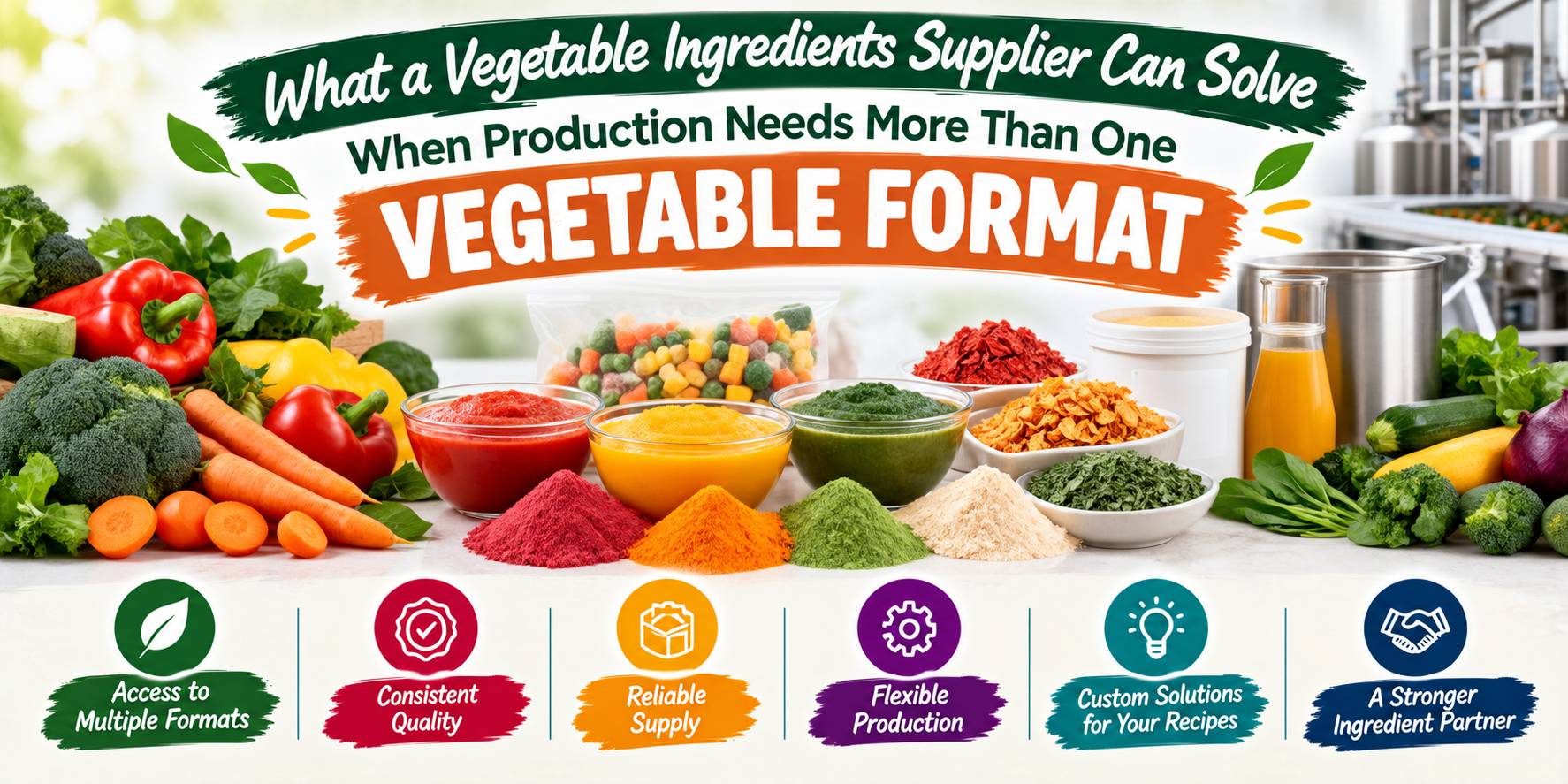
How a Vegetable Ingredients Supplier Supports Multi-Format Sourcing for Different Processing Needs
Follow the ingredient through the line. Where does it enter, what happens during heating, and what should remain after filling? Each format answers those questions differently.
How IQF Vegetables Fit Production Where Piece Identity and Portioning Need to Stay Intact
IQF pieces allow portioning without handling a single frozen block. Specify cut dimensions and acceptable fines, then check how the pieces survive mixing and cooking. Separate pieces at receipt do not guarantee intact pieces in the finished meal.
Research across 8 fruits and vegetables found no significant vitamin C difference between fresh and frozen samples in 5 of 8 commodities. The remaining 3 showed higher vitamin C in frozen samples. That finding challenges assumptions about fresh produce, but it does not establish nutritional equivalence across every crop or process.
Why Vegetable Purees Work Better for Blended Products and Smooth Formulations
Smoothness needs a specification. A puree that looks uniform in a sample cup may behave differently through your screen or pump. Ask about particle size, consistency, and separation rather than accepting the format name as proof of suitability.
For vegetable purees, a vegetable ingredients supplier should help obtain specifications that let production compare incoming lots. Run samples through the intended heating and filling sequence. Any correction for added water or inconsistent texture belongs in the cost calculation.
How Concentrates Reduce Bulk When Flavor and Solids Need to Stay Focused
Removing water changes the amount you need to handle, but concentrate pricing requires a solids comparison. A lower delivered price per pound may disappear when you calculate the amount required for the formula.
Compare vegetable concentrates at the intended dilution and record flavor alongside processing behavior. Soluble-solids readings alone do not describe pulp content or viscosity. Confirm whether the ingredient delivers the solids your recipe requires, rather than assuming that concentration guarantees body.
Why Dried and Freeze-Dried Vegetables Fit Lower-Moisture Applications
A dry seasoning blend has little tolerance for an ingredient that absorbs moisture and clumps during storage. Set moisture and water-activity requirements against the finished application, then examine the package’s protective properties.
Freeze-dried pieces also need a handling trial. Fragile material may arrive within specification yet generate fines during conveying. For products that require rehydration, test the available contact time and temperature. An ingredient that softens in a laboratory beaker may not soften within your production schedule.
Ask your vegetable ingredients supplier for handling information that reflects your equipment, especially when breakage changes the finished product’s appearance. Include this in sample evaluations.
How Tomato Formats Change Texture, Viscosity and Processing Choices
Specify the tomato’s job before selecting paste, diced, crushed, or whole-pack material. A sauce base needs a different balance of body and piece identity from a chunky filling.
A vegetable ingredients supplier should distinguish hot-break from cold-break paste, then supply the relevant consistency specifications. Hot-break processing generally favors viscosity retention, but the grade and subsequent processing still influence results. Compare candidates at matching solids and under the same test conditions. Otherwise, dilution differences may look like differences in paste performance.
Why Packaging, Storage and Handling Requirements Should Influence Format Selection
Receiving capacity can eliminate a format that performs well in the recipe. Check freezer space, transfer equipment, and how much product remains after each batch.
|
Format |
Receiving and handling check |
Production consequence |
|
Frozen pieces |
Storage temperature and pack breakup |
Portioning and piece damage |
|
Puree |
Pack size and transfer method |
Emptying time and residual waste |
|
Concentrate |
Pumpability and dilution procedure |
Dosing and water adjustment |
|
Dried material |
Moisture protection and conveying |
Clumping or fines generation |
Include emptying losses when comparing pack sizes. The invoice weight and the amount reaching the mixer may differ.
How JuiceDeals Supports Vegetable Sourcing Across Frozen, Puree, Concentrate and Shelf-Stable Formats
At JuiceDeals, we approach vegetable requirements through Schare & Associates’ broader commercial ingredient sourcing operation. Our range extends from frozen vegetables and blendable preparations to canned options and industrial tomato products. The wider fruit-and-vegetable offering also includes vegetable concentrates, IQF, dried, and freeze-dried formats.
That breadth creates several starting points for a sourcing discussion:
- Match visible pieces or blendable ingredients to the product’s required texture.
- Compare hot-break and cold-break tomato paste alongside diced, crushed, and whole-pack alternatives.
- Discuss related formulation inputs through the broader food-ingredient range.
We also help buyers locate requested products through our sourcing team rather than treating the published assortment as the entire conversation. Buyers still need confirmation of specifications, packaging, volume, and current availability for each inquiry.
JuiceDeals’ Hot Deals operation adds access to changing excess-inventory opportunities. Those lots warrant the same qualification as regular purchases. A favorable offer only belongs in the plan when its remaining shelf life and specifications fit production.
What Food Manufacturers Should Review Before Consolidating Multiple Vegetable Formats With One Supplier
Ask a bulk vegetable ingredient supplier how it will manage specifications across processors. A shared sales contact does not make separate manufacturing sites interchangeable.
Compare traceability documents, change-notification procedures, and supply arrangements for each item. Keep approved alternatives tied to individual specifications. Consolidation should reduce purchasing administration without allowing an untested substitution to enter production because the crop name matches.
Conclusion: Matching Vegetable Format With Production Needs Instead of Forcing One Option
Choose the format against the line, then compare its delivered cost and usable yield. The right vegetable ingredients supplier helps move that discussion beyond an ingredient name. Share your application and specifications with us, and let us review sourcing options around the demands of your production process.
Frequently Asked Questions
Does a vegetable ingredient automatically qualify as organic?
No. Request the applicable organic certification and confirm that it covers the ingredient and handling operation. Do not infer organic status from the vegetable name.
What should accompany a sample request?
Send your target specification and intended application. Ask whether the sample represents commercial supply, and request the lot details needed to connect testing with purchasing decisions.
Can one certificate of analysis cover every delivery?
Check the lot references against each shipment. A certificate for a different lot does not document the results for your delivery, even when product descriptions match.
Should buyers ask about allergens in vegetable ingredients?
Request the ingredient statement and allergen documentation, including information about shared equipment. The vegetable itself does not describe every processing input or potential cross-contact exposure.
How should manufacturers handle a change in crop origin?
Request notice before shipment and compare the new material against the approved specification. Decide whether additional testing is necessary before accepting it for routine production use.