
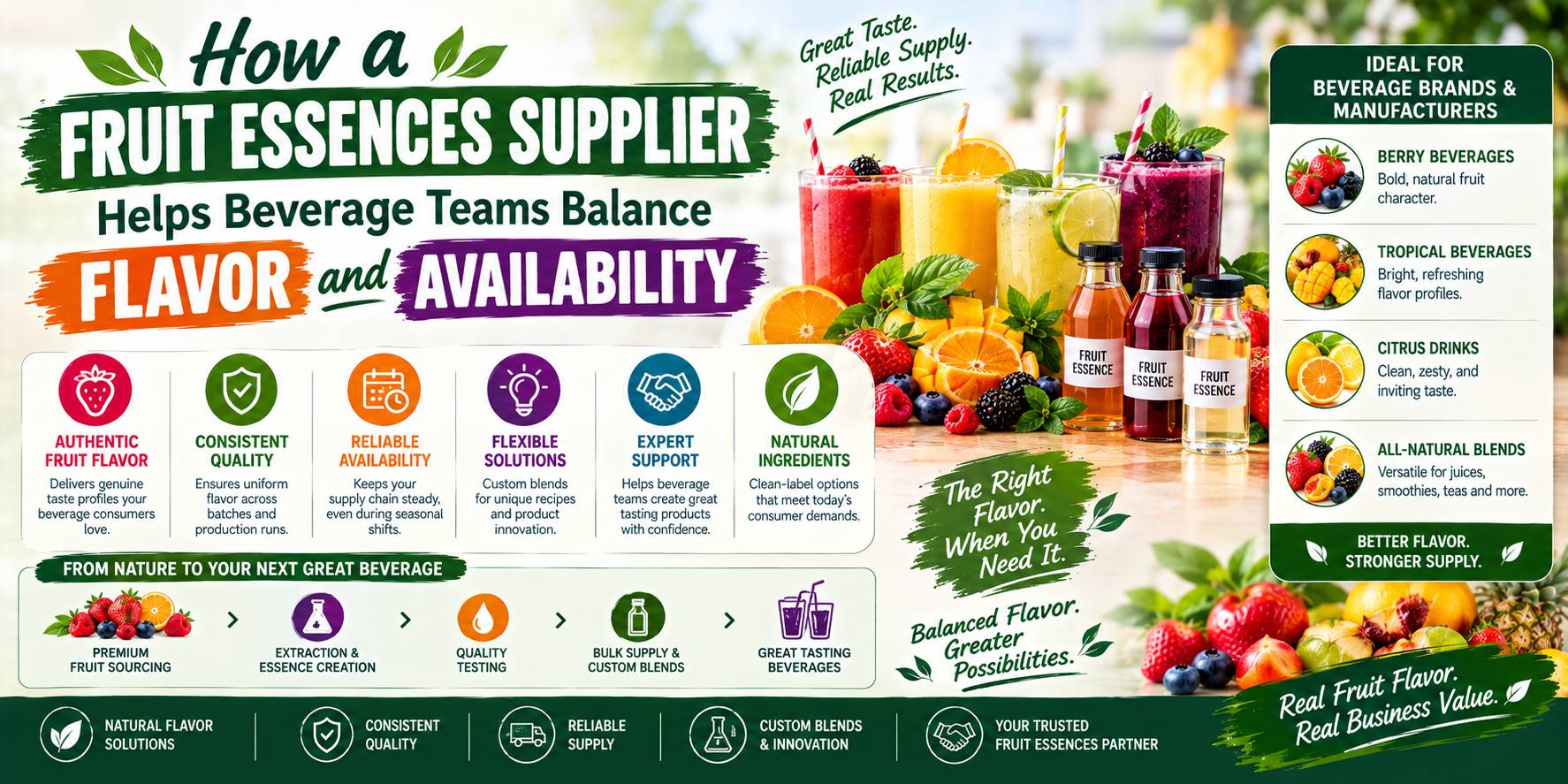
Have you ever approved a drink that tasted right in development, then watched the next batch drift because the fruit ingredient changed? That happens more often than teams expect. Crop timing, storage, origin, and processing can all change what reaches the tank.
A fruit essences supplier gives beverage teams another option when the base fruit no longer delivers the same aroma. Essences can work alongside concentrates, purees, extracts, juice bases, or WONFs. Used well, they help a team hold the intended fruit character while procurement works through availability and volume.
How Fruit Essence Sourcing Connects Flavor Goals With Steady Production
Beverage development starts with taste, but production adds another question: can the profile repeat month after month? That is where sourcing gets technical.
A good fruit essences supplier can help compare aroma options before a team locks the formula. One mango beverage study found that added mango aroma supported up to 32.14% sugar reduction without lowering overall liking. Aroma does not replace sugar, but it can change how a low-sugar drink is perceived during reformulation.
Where a Fruit Essences Supplier Adds Value Across Beverage Development
A beverage formula can change at several points, from early trials to larger production runs. Fruit essences give teams another way to adjust aroma when the base fruit no longer performs the same.
Keeping Fruit Aroma Consistent Across Different Production Batches
Fruit does not behave like an input with one fixed profile. Harvest date, variety, storage, and concentration method can change aroma intensity.
A fruit essences supplier can help the team select a profile that brings a drifting batch back toward the approved target. This helps when concentrate still delivers body and acidity but its top notes feel weak.
Filling Aroma Gaps When Processing Changes the Original Fruit Profile
Heat, evaporation, and long storage can strip volatile compounds. The drink may still taste fruity, yet its first aroma can feel muted.
Natural essences give formulators a way to rebuild part of that lost aromatic character. In many formulas, essence works as a supporting layer, giving developers more control over dosage.
Supporting Seasonal Fruit Flavors When Raw Ingredient Supply Varies
Seasonality can disrupt a sourcing plan. A berry, stone fruit, or tropical ingredient may shift in availability or sensory quality through the year.
For larger runs, a bulk fruit essence supplier can help procurement plan beyond one harvest window. Beverage essences can help hold a familiar aroma while the base ingredient changes between approved sources.
Helping Teams Source Less Common Fruit Profiles for New Formulations
New product teams often want flavors outside standard purchasing lists. Cranberry, apricot, pear, wildberry, and tropical profiles may require more sourcing work.
A second study gives another useful formulation point. Yogurt with strawberry flavor stayed as well accepted after a 25% sugar reduction, using strawberry flavor at 0.2%. The result will not transfer to every beverage, but it supports testing aroma during sugar-reduction trials.
Matching Order Volumes With Trials, Launches and Larger Production Runs
The first production need might be a pail, not a truckload. A successful launch changes that quickly.
Flexible supply helps teams avoid buying far beyond a pilot requirement, then scrambling when demand rises. It also helps co-packers and procurement teams plan test runs, regional launches, and larger schedules without changing suppliers too early.
Combining Essences With Concentrates, Purees, Extracts and WONFs
One ingredient rarely does every job. A concentrate may carry acidity and fruit solids. A puree can add body. Natural essences can lift aroma, while extracts can target narrower flavor notes.
|
Ingredient Format |
Main Formulation Job |
Where It Often Fits |
|
Fruit essence |
Aroma support |
Restoring or lifting fruit notes |
|
Concentrate |
Fruit base |
Body, acidity, sweetness, character |
|
Puree |
Texture and body |
Smoothies, nectars, thicker drinks |
|
Natural extract |
Specific flavor note |
Fine-tuning a profile |
|
WONF |
Defined fruit-style profile |
Reformulation and flavor development |
This layered approach gives each ingredient a specific job and leaves teams alternatives when one fruit format becomes harder to source.
How Juice Deals Supports Fruit Essence and Beverage Ingredient Sourcing
Juice Deals, operated by Schare & Associates, works across fruit essences, natural extract flavors, concentrates, purees, powders, frozen fruit, oils, blends, and selected NFC juices. The company lists essence profiles such as apple, mango, peach, pear, pineapple, raspberry, strawberry, cranberry, cherry, watermelon, and wildberry.
The business has more than 25 years of industry experience and can handle orders ranging from one pail to multiple truckloads. It also works with an affiliated flavor house that supports fruit-type flavors, juice bases, WONFs, product matching, and beverage development.
We can help source common and harder-to-find fruit ingredients, including organic and conventional options. We also work with beverage teams that need more than one format for the same project, which can reduce the number of separate sourcing conversations.
- Small trial quantities through commercial-scale orders
- Product matching and broader fruit ingredient sourcing support
That structure fits brands, co-packers, breweries, wineries, food manufacturers, and flavor houses with different production needs.
What Beverage Teams Should Review Before Selecting Fruit Essences for a Formula
Start with the final drink, not the ingredient catalog. Review processing temperature, pH, sweetness, packaging, shelf life, dosage, and aroma after filling.
A fruit essences supplier should explain how an essence behaves alongside acids, sweeteners, concentrates, and other flavor components. Beverage essences may perform differently in still, carbonated, dairy, or alcoholic drinks.
Procurement needs its own checklist. Ask about minimum quantities, lead times, batch availability, documentation, storage, and supply at larger volumes. Those details can save more time than chasing a lower ingredient price.
For beverage teams, the key question is not whether an essence smells good on its own. The useful test is whether it still works after sweeteners, acids, processing, filling, and storage have done their part. That is where bench trials and production trials earn their keep.
Conclusion
A beverage can taste excellent in the lab and still fail when its fruit profile changes between runs. Formulation and sourcing need to move together.
Working with a fruit essences supplier gives beverage teams another route for protecting aroma, handling seasonal shifts, and supporting a wider fruit ingredient plan. If you are developing or reformulating a drink, or sourcing a difficult fruit profile, contact us, and we can help review the options and order requirements.
FAQs
How long do fruit essences usually remain usable after opening?
Once opened, fruit essences can stay usable for months, but storage conditions make a difference. Keep them sealed, follow temperature guidance, and check supplier documentation.
Can a fruit essence be used in alcoholic drinks?
Yes, fruit essences can work in alcoholic drinks. Alcohol strength, acidity, sweetness, and processing can change how the aroma comes through, so trial batches help.
Do fruit essences contain fruit solids?
Usually not. Fruit essences are mainly used for aroma, not fruit solids. Since formulas vary, buyers should check the product specification before adding them to production.
Can the same fruit essence work in both hot-fill and cold-fill drinks?
It can, but heat may change the aroma. A fruit essence that works in cold-fill drinks might need a different dosage when used in hot-fill production.
What documents should a beverage company request from an essence supplier?
Ask for the product specification, allergen details, certificate of analysis, storage instructions, and relevant regulatory documents. Your quality team may also request extra paperwork internally.


