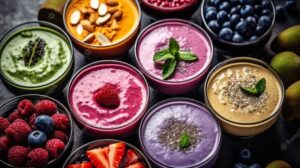
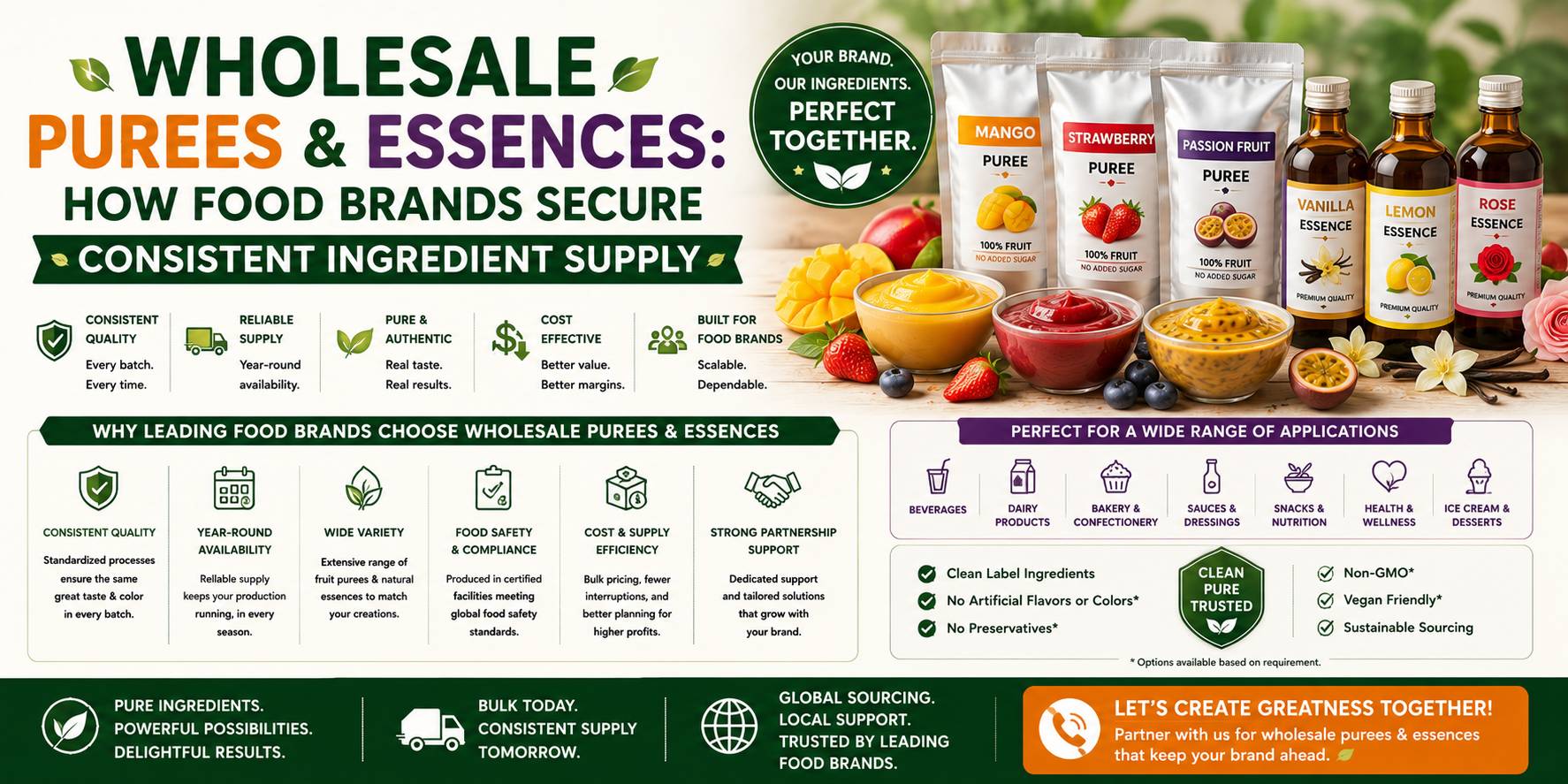
How does a food brand keep mango yogurt tasting the same in January and July? The answer starts upstream, with sourcing rules that lock in flavor, texture, color, and delivery schedules. Brands that rely on wholesale purees and essences do not just buy fruit inputs. They buy predictability, batch control, and supply continuity that protect shelf appeal and margins when one inconsistent lot can affect thousands of units.
Why Consistency in Wholesale Purees and Essences Shapes Food Brand Output
Consistency decides whether a food brand tastes familiar every time a customer buys it. When purees and essences vary from batch to batch, flavor, color, texture, and aroma start shifting in ways consumers notice fast. That is why brands put so much focus on stable ingredient sourcing before production even begins.
Standardized Taste Across Batches
Consumers notice taste shifts fast. A smoothie that tastes bright one month and dull the next invites complaints. Purees and essences help formulators hold the same profile across production cycles because they offer measurable solids, acidity, aroma intensity, and varietal character. Procurement teams that work with reliable fruit puree suppliers can request tighter specifications on Brix, pH, pulp level, and sensory benchmarks. That discipline keeps product developers from reformulating every season and gives operations teams fewer surprises.
Stable Colour and Texture in Finished Products
Color sells first. Strawberry filling, peach yogurt, and tropical sauces depend on visual consistency. Purees contribute body, suspended solids, and natural hue, while essences sharpen aromatic notes without forcing a heavy dosage rate. This pairing helps brands hold a cleaner ingredient deck and a more stable eating experience. It also helps when brands scale from pilot runs to full commercial output, where minor ingredient variation turns into visible inconsistency.
Reliable Year-Round Ingredient Availability
Seasonality is not waiting for a launch calendar! Availability can be squeezed at the worst possible time by changes in harvesting schedule, weather events, and freight pressures. The risk is mitigated through frozen, aseptic, and drum-packed purees and essences as part of strong wholesale programs, which provide extended planning periods.
With frozen puree, the shelf life is 24 months with proper storage conditions, allowing manufacturers to better anticipate, import, and stockpile against the demand or crop problems. This additional “runway” gives buyers the freedom to preserve service levels, rather than pursuing “spot supply”.
Controlled Sourcing and Traceability
Food brands are under increased scrutiny from retailers, auditors, and consumers. Buyers are looking for origin information, lot control, allergen information, and processing records. Good suppliers record the source of the fruit, the method of processing the fruit, the pack format, and the handling standards.
By purchasing natural fruit essence with traceability records linked to the brand, a brand can provide technical responses more quickly and resolve issues without having to close out several SKUs. That control helps you with compliance and helps to ensure that the recalls are not wide-reaching and costly events.
Reduced Production Delays and Waste
Plants lose money when ingredients arrive late, separate in tanks, or behave differently during mixing and heating. Stable puree viscosity, defined pulp content, and known flavor strength allow production managers to run tighter process windows. Typical Tommy Atkins mango yields show why specifications matter. The fruit averages about 79.5% pulp, 12% skin, and 8.5% stone, so raw fruit economics differ sharply from finished ingredient economics. Buyers who source standardized mango puree avoid trimming loss, variable yields, and extra labor.
Flexible Bulk Formats for Different Food Applications
A beverage plant, bakery line, and dairy processor rarely need the same pack size or handling format. Some want aseptic drums for warehousing. Others need frozen pails for recipe control or bag-in-box systems for faster changeovers. Flexible formats let R and D, purchasing, and operations align ingredient flow with batch size and storage capacity. It prevents stockroom congestion, excess thaw cycles, and avoidable waste.
Key Factors to Evaluate Before Choosing a Supplier
Buyers should look beyond price. The better question is whether the supplier can protect performance over time. Review these points before signing volume commitments.
|
Evaluation Factor |
What to Check |
|
Specification control |
Brix, pH, viscosity, color, aroma profile, pulp level |
|
Supply continuity |
Multi-origin sourcing, harvest planning, safety stock |
|
Pack options |
Aseptic drums, pails, bag-in-box, frozen formats |
|
Documentation |
COA, traceability records, allergen, and origin data |
|
Technical support |
Reformulation help, application advice, shelf life input |
The supplier should also show how it handles crop variation, reformulation requests, and emergency substitutions. Strong fruit puree suppliers and natural fruit essences partners think like operations, not just sales.
How Wholesale Supply Chains Deliver Value to Food Manufacturers
When supply chains work well, brands feel the effect in margin protection and planning stability. Consistent inputs reduce production stoppages, cut rework, and tighten forecasting. For many plants, wholesale purees and essences also create a cleaner purchasing model because commercial teams can promise the same product experience across regions and seasons.
A few operational gains stand out:
- lower procurement friction through consolidated sourcing
- fewer vendor handoffs across puree, pulp, concentrate, and aroma needs
- Better inventory planning through longer shelf life formats
- less waste from batch variation and emergency overordering
This is where JuiceDeals fits naturally. We support food, beverage, dairy, bakery, and nutraceutical buyers who need more than a catalog item. We connect bulk ingredient demand with supply routes, format choices, and specification discipline that hold up under commercial pressure.
Why Brands Choose Juice Deals for Bulk Purees and Essences
We work with food and beverage manufacturers that need more than a basic ingredient vendor. Instead of managing separate suppliers for purees, pulps,concentrates,essences, and related fruit ingredients, we help bring sourcing under one channel. That makes procurement easier for brands operating across smoothies, dairy, bakery, confectionery, nutraceuticals, and foodservice.
What we bring to the table:
- one-stop bulk ingredient procurement across connected fruit categories
- support for drum, tote, truckload, and container-scale orders
- custom specifications for Brix, flavor profile, and format needs
- multi-origin sourcing options to reduce dependence on one growing region
- supply continuity support during crop pressure and seasonal shortages
We also help brands reduce vendor overlap, lower sourcing friction, and move from forecast to production with fewer delays. Our focus stays on continuity, technical fit, clean-label sourcing options, and procurement efficiency, so teams can keep products consistent without turning each ingredient order into a separate project.
Conclusion
Food brands do not win consistency by accident. They build it through disciplined sourcing, defined specifications, traceability, and supply partners that can keep pace with production. When buyers treat wholesale purees and essences as a strategic input rather than a simple commodity, they protect flavor, color, throughput, and margin at the same time. If your team wants steadier ingredient performance across product lines, order with a supply model built for scale and continuity.
FAQs
How do purees affect product texture in dairy and bakery lines?
Purees add body and fruit character, helping products keep mouthfeel and fruit identity.
What is the main job of fruit essences in formulation?
Essences sharpen aroma and top-note flavor without adding body, sugar, or solids.
Which pack format works best for high-volume food plants?
The best format depends on storage, batch size, thaw capacity, and line speed.
Why do buyers ask for Brix and pH targets before ordering?
Those targets help plants hold flavor balance, process stability, and repeatable batches.
Can one supplier handle several fruit ingredients for one brand?
Yes. Manufacturers prefer one source to simplify purchasing and logistics.