
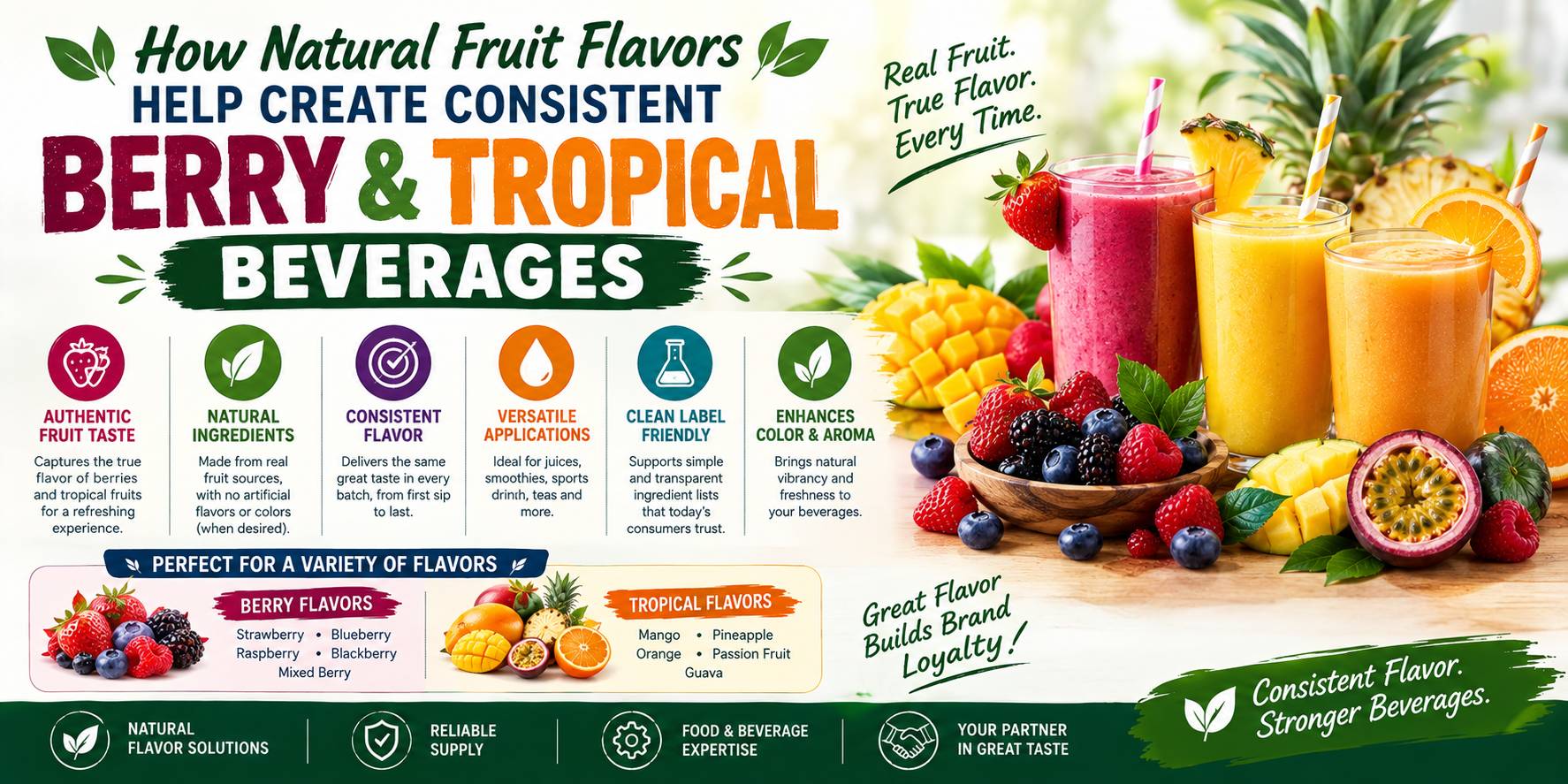
Have you approved a berry drink, then tasted the next batch and wondered why it felt different? Fruit changes with crop, origin, maturity, storage, processing, and concentrate strength. Strawberry can arrive brighter one month and softer the next. Mango may turn floral, ripe, or green.
That variation creates a production problem. Customers remember the drink they bought last time. Natural fruit flavors can help bring a changing fruit base closer to the approved profile by filling aroma gaps or supporting a weak fruit note.
How Natural Fruit Flavors Keep Berry and Tropical Beverages Consistent
Berry and tropical drinks can change from batch to batch even when the recipe stays the same. Fruit origin, crop conditions, processing, and storage can all shift aroma, sweetness, acidity, and overall fruit character.
Keep Strawberry, Blueberry, and Cranberry Profiles Steady Across Seasons
Berry drinks can shift when raw material changes. Strawberry may lose its fresh top note. Blueberry can taste darker or flatter. Cranberry may bring more acid than expected.
Do not start by adding more flavor. Check aroma, acidity, body, and finish against a retained standard. Natural fruit flavors work better when a formulator corrects one missing part instead of covering the whole formula.
A beverage flavor supplier can compare incoming lots with the target profile. R&D can then choose the right adjustment.
Hold Mango, Pineapple and Passion Fruit Notes Across Production Runs
Mango, pineapple, and passion fruit have strong identities, so a small shift can change the whole drink.
Mango may move from ripe and pulpy to green or resinous. Pineapple can turn sharper after processing. Passion fruit can take over the finish if dosage rises.
A sensory study found that mango aroma allowed up to 32.14% sugar reduction in a low-sugar beverage without lowering overall liking. The strongest combination used 0.25% mango flavor with 2.24% sucrose. The result shows why aroma and sweetness need evaluation together during sugar reduction.
Balance Sweetness, Acidity and Aroma When Fruit Crops Vary
A drink can meet its Brix target and still taste wrong. Acid, fruit solids, aroma, and bitterness all influence perception.
Natural fruit flavors can support fruit character when concentrate stays within specification but aroma drops. Food flavors also interact with sweeteners, acids, carbonation, and heat. Test them in the finished drink, not only in water.
We often see a small aroma correction work better than extra concentrate. More concentrate may make the drink heavy without fixing the missing note.
Maintain Familiar Flavor When Concentrate or Puree Sources Change
Crop shortages, freight delays, and origin changes can force a different concentrate or puree source. The replacement may pass laboratory checks yet taste unlike the previous lot.
Ingredient
Main job
Consistency use
Juice concentrate
Solids, sweetness, acidity
Carries the fruit base
Puree
Body and fruit character
Adds texture and weight
Essence or oil
Volatile aroma
Rebuilds fresh top notes
Flavor system
Specific fruit notes
Brings lots nearer target
WONF blend
Juice plus other natural flavor
Helps match a chosen juice profile
A wholesale fruit flavor supplier and R&D team should work from the same sensory benchmark. Analytical numbers alone will not identify every aroma difference.
Build Multi-Fruit Blends Without One Flavor Taking Over the Formula
Multi-fruit beverages can become muddy when every fruit competes. Strawberry disappears behind raspberry, while passion fruit may dominate the finish.
Set the hierarchy before changing dosage. Decide which fruit leads, which supports, and which belongs mainly in the finish. Natural fruit flavors can help place those notes with more control.
We use the same approach with concentrates, purees, essences, and flavor systems. Give each ingredient one main job.
Support Larger Production Runs Without Losing the Intended Fruit Profile
A bench sample and production tank behave differently. Heat, mixing time, ingredient order, and holding time can change aroma release.
Set acceptable ranges for aroma, sweetness, acidity, and finish before scale-up. Test the beverage after the processing it will face in production. Food flavors may present differently after pasteurization, carbonation, or storage.
A beverage flavor supplier can compare trial and plant samples, but the production team still needs a repeatable sensory check. Small shifts become costly when volume grows.
How JuiceDeals Supports Berry and Tropical Beverage Formulation
JuiceDeals, operated by Schare & Associates, works across fruit sourcing and beverage development. The company has more than 25 years of industry experience and serves beverage companies, wineries, breweries, co-packers, distributors, and flavor houses.
Its range covers concentrates, purees, frozen fruit, fruit powders, essences, oils, juice blends, and natural extract flavors. An affiliated flavor house works with fruit-type flavors, juice bases, WONFs, and product matching for beverage programs. That range gives R&D teams room to test concepts before committing to an ingredient purchase for production.
For growing beverage programs:
Buyers can source from one pail through multiple truckloads, which fits trials, seasonal runs, and commercial production.
The team can help locate harder-to-source fruit ingredients when regular supply becomes difficult.
JuiceDeals states that many WONF blends remain available year-round. It also says some may cost 50% to 80% less than the 100% juice concentrates they are designed to match. We compare ingredient format, supply, sensory target, and formula fit before suggesting a change for a growing beverage program.
Where Fruit Flavor Systems Add Value Alongside Concentrates, Purees, Essences and WONF Blends
A berry or tropical drink rarely depends on one fruit component. Concentrate carries solids and acid. Puree adds body. Essence or oil can replace volatile notes. WONF blends can support a familiar profile when sourcing changes.
Used with a defined purpose, fruit flavor systems can restore a top note, sharpen varietal character, support a lower-sugar formula, or bring a replacement concentrate nearer the benchmark.
More flavor does not automatically make a better drink. Ask which ingredient should perform each job and how little adjustment can bring the batch back to target.
Conclusion
Berry and tropical beverage consistency depends on the whole formula. Fruit base, aroma, sweetness, acidity, processing, and scale all affect the finished drink. Natural fruit flavors give formulators another way to correct sensory drift without changing the product consumers recognize.
If you are working on a berry blend, tropical reformulation, or supply change, JuiceDeals can help compare concentrates, purees, essences, WONF blends, and related flavor options. Contact us to review the fruit profile, ingredient format, and quantity for your next production run.
Frequently Asked Questions
Do natural flavor ingredients contain actual fruit juice?
Not always. A natural flavor may come from fruit or fruit juice. Check the ingredient specification for the supplied system.
Can natural flavors be used in organic beverages?
They can, but the finished product must follow USDA organic rules. Check certification and documentation before formulation.
Do fruit-derived natural flavors add sugar?
Not automatically. Check the carrier system and specification because flavor formats can contain different supporting ingredients.
How should opened fruit flavor ingredients be stored?
Follow the supplier’s storage instructions. Temperature, light, oxygen, and repeated opening can affect volatile aroma compounds and flavor performance.
Can a natural fruit flavor be labeled as a specific fruit flavor?
Label wording depends on the flavor source and finished formula. U.S. rules distinguish characterizing flavors and combinations with other natural flavors, so review the final formulation before printing labels.