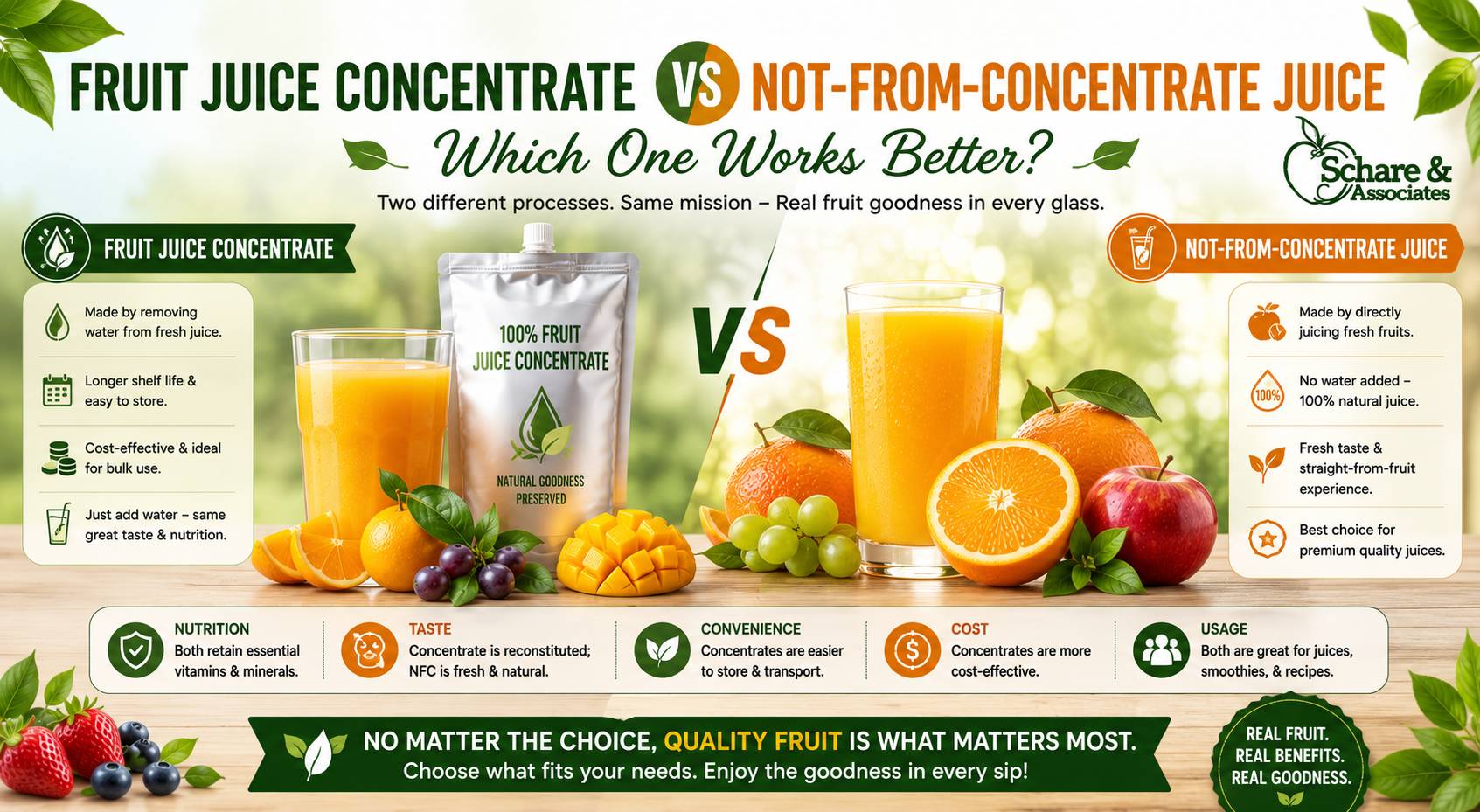
Have you ever compared two orange juices and wondered why one says “from concentrate” while the other says “not from concentrate”? The difference sounds small. In food production, it is not.
Fruit juice concentrate has some water removed after extraction. That makes it denser, easier to ship, and more flexible in recipes. Not-from-concentrate juice, usually called NFC juice, stays closer to its original liquid strength after processing.
Neither format wins every time. Your choice depends on what you make, how your plant runs, how much storage you have, and how much formula control you need. For commercial buyers, that choice affects flavor, Brix, freight, storage, yield, and handling.
Fruit Juice Concentrate vs Not-From-Concentrate Juice: Key Differences at a Glance
Concentrate also gives manufacturers more room to adjust Brix, sweetness, and fruit intensity during formulation. NFC juice works better when a recipe needs a ready-strength liquid with fewer processing steps.
How Each Juice Type Is Processed
The split starts with processing. To make concentrate, processors extract juice and remove part of the water through evaporation, membranes, or freeze concentration. Processors may recover aroma compounds and standardize Brix before packing.
NFC juice skips concentration. After extraction, processors may pasteurize, chill, deaerate, blend, or package it for refrigerated or frozen storage. That can mean fewer formulation steps, but the buyer transports more water.
Storage and Shelf-Life Advantages
Concentrated juice takes up less room because it carries less water. A plant handling large fruit volumes can use less freezer, cooler, or warehouse space.
In one three-stage freeze-concentration study, orange juice concentrate showed a 429% increase in polyphenols compared with the original juice. That result does not apply to every concentrate, so buyers still need the product specification.
Shipping and Handling Considerations
Less water means more fruit solids fit into each drum, pail, or tote, which can cut shipping volume.
When buying fruit juice concentrate, teams should review packaging, thawing instructions, storage temperature, lead time, and how the ingredient moves through the plant. A low price can lose its appeal if handling becomes difficult.
Flavor, Color, and Nutrient Retention
Flavor changes with fruit variety, harvest conditions, processing temperature, aroma recovery, and storage. NFC juice can deliver a familiar juice profile. Concentrates can bring stronger fruit character where extra water would weaken a formula.
The same orange juice study found antioxidant activity increased by 168%, 272%, and 343% across successive concentration stages. Vitamin C and minerals were also retained. That result belongs to one processing system, not every product.
Cost and Production Flexibility
Price per pound tells only part of the story. Freight, storage, yield, labor, waste, and production time count too.
|
Factor |
Concentrate |
Not-From-Concentrate |
|
Shipping volume |
Lower in many cases |
Higher because more water remains |
|
Storage use |
More fruit solids per unit of space |
More space required |
|
Formula control |
Water and strength can be adjusted |
Starts near ready strength |
|
Plant handling |
May need thawing or reconstitution |
Often easier to add directly |
|
Cost review |
Ingredient plus handling and dilution |
Ingredient plus storage and freight |
Premium fruit juice concentrates for cooking can work well in sauces, fillings, glazes, and prepared foods where extra water can thin texture or extend cook time.
Best Uses for Food and Beverage Manufacturers
Concentrate suits manufacturers needing compact storage, adjustable Brix, stronger fruit notes, or tighter water control.
A beverage plant may use it to build drinks to a set strength. A bakery may want fruit flavor without excess liquid. A sauce maker may use it to manage sweetness, acidity, and body.
NFC juice fits plants that prefer ready-strength juice and can support the larger freight and storage footprint.
What Should Buyers Compare Before Choosing a Juice Format?
Start with the finished product, not the ingredient name.
What Brix and acidity do you need? What color? Does the formula need fruit solids, aroma, sweetness, or only a light juice note?
Buyers should compare:
- Brix, acidity, origin, processing method, packaging, certifications, storage temperature, and microbiological limits.
- Freight, usable yield, thawing time, minimum order, lead time, labor, and expected production loss.
A cheaper ingredient may cost more once storage, labor, or yield problems appear. Compare total production cost, not invoice price alone.
How JuiceDeals Helps Businesses Source Premium Fruit Juice Concentrates for Cooking
JuiceDeals.com operates through Schare & Associates, Inc., a U.S. food ingredient supplier with more than 25 years in the industry. Keith Schare entered the fruit concentrate business in 1992, before forming the company in 1997, so concentrates have been part of the business from the start.
We work with beverage manufacturers, wineries, breweries, co-packers, flavor developers, jam and jelly companies, distributors, and other food businesses. The range includes conventional and organic concentrates across citrus, berries, tropical fruits, stone fruits, and other varieties.
Our sourcing model stays flexible:
- Orders can range from a single pail or case to multiple truckloads.
- We also help buyers locate hard-to-source ingredients and selected overstock opportunities.
We also handle fruit purees, frozen fruit, dried ingredients, and related sourcing needs. For buyers managing several ingredient categories, that can mean fewer supplier conversations while each product keeps its own purchasing requirements.
Which Juice Option Fits Different Production Needs?
Choose concentrate when you need more fruit solids in less space, adjustable dilution, stronger fruit impact, or tighter water control.
Choose NFC juice when the formula benefits from a ready-strength liquid and the plant can handle a larger storage and shipping footprint.
For prepared foods, premium fruit juice concentrates for cooking can be useful when water changes texture. Think barbecue sauces, glazes, marinades, bakery fillings, dressings, or dairy products. A denser ingredient may remove a later reduction step.
We often see better buying decisions when teams compare the ingredient against the plant setup instead of choosing by label preference.
Conclusion
There is no universal winner. NFC juice can make sense when a ready-strength liquid fits the recipe and plant workflow. Fruit juice concentrate often gives manufacturers more control over dilution, storage, freight, and fruit intensity.
Compare Brix, acidity, processing method, packaging, yield, storage needs, and the finished product. Look at how the ingredient behaves on your line, not just on paper.
When you need the right concentrate, quantity, or fruit profile, contact JuiceDeals and order with a sourcing team that works across food and beverage applications. We can help keep production supplied.
FAQs
Is concentrated juice the same as fruit syrup?
No. Juice concentrate comes from juice after water removal. Fruit syrup may include sugar, flavors, or stabilizers.
Can juice concentrate replace fresh fruit in baking?
Sometimes. Concentrate adds flavor, sweetness, acidity, and color. Fresh fruit also brings fiber and texture.
What does Brix mean on a juice specification?
Brix measures soluble solids. Manufacturers use it to compare concentration strength and keep formulas consistent.
Does every juice concentrate need refrigeration?
No. Storage depends on the product and process. Some need freezing or refrigeration; others may stay shelf-stable before opening.
Can juice concentrates be used in savory foods?
Yes. They appear in marinades, dressings, barbecue sauces, glazes, soups, and meat applications where fruit sweetness or acidity fits.