
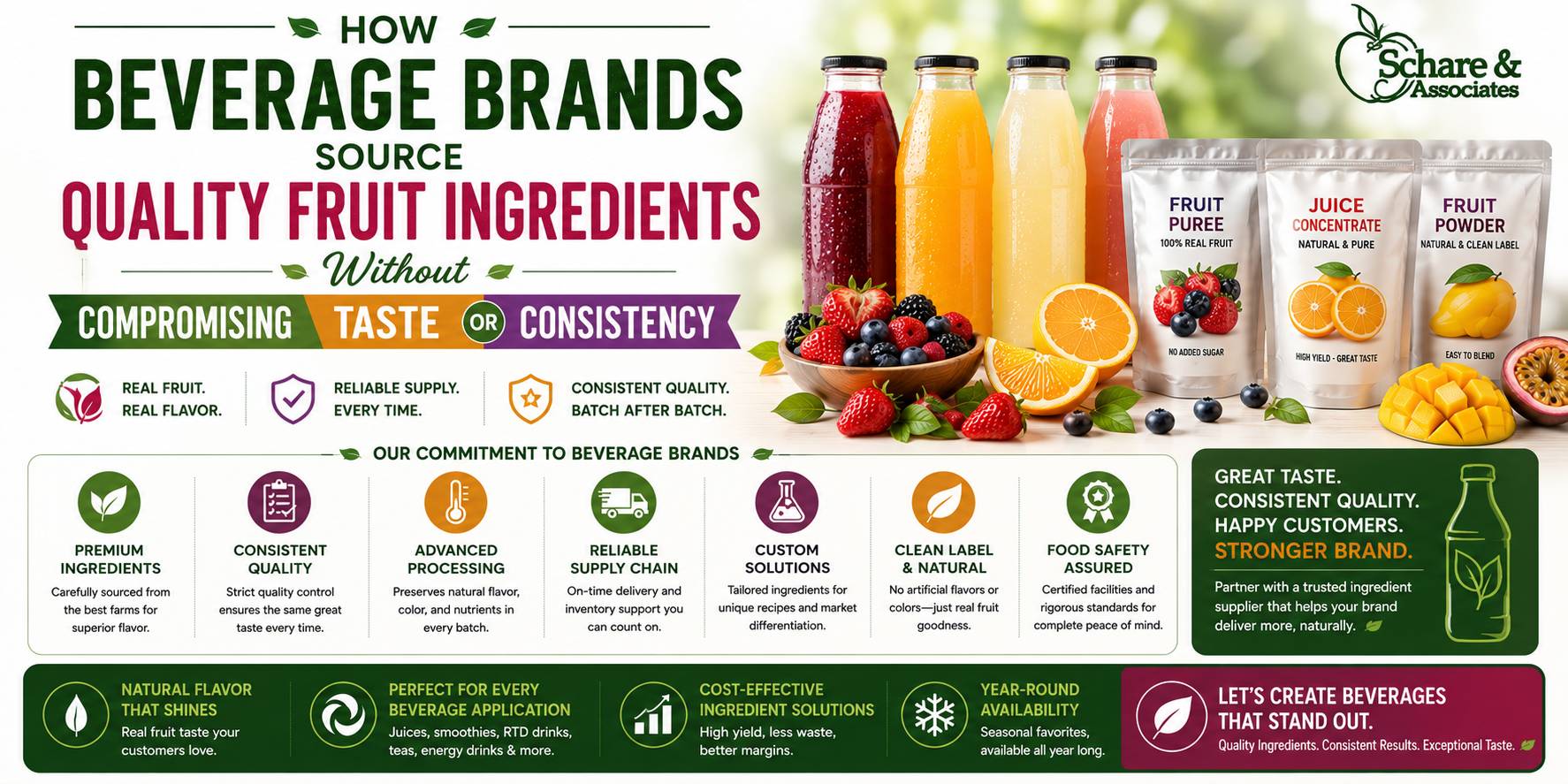
Have you bought the same fruit drink twice and wondered why the second bottle tasted weaker, sharper, or simply off? That difference often starts with the crop, processor, storage method, or supplier.
Beverage companies work with natural ingredient suppliers for the food industry because fruit changes from one season to another. Rain affects sweetness. Heat alters acidity. Harvest timing changes aroma. Storage dulls color, too.
Perfect fruit does not exist at a commercial scale. Brands need ingredients that stay within a workable range and behave well during blending, heating, filling, and shelf storage.
What Beverage Brands Look for When Choosing Natural Ingredient Suppliers for the Food Industry
A good sample can win attention quickly. Still, one sample says little about what arrives three months later.
Buyers check Brix, acidity, pulp, color, origin, processing, packaging, shelf life, and microbiological limits. They also ask whether the supplier can hold a specification through the season, report origin changes, and secure backup stock.
Price enters the discussion. Yet cheaper material can create higher costs when production teams keep correcting every batch.
How a Foodservice Ingredient Wholesaler Supports Better Beverage Production
A foodservice ingredient wholesaler can do more than move cartons and drums. The better ones compare formats, review stock timing, and match materials to the plant.
Reliable Flavor Across Every Production Batch
Brix and acidity give formulators numbers to work with. They do not tell the whole story.
Two apple concentrates may meet the same specification, yet one tastes cooked while the other feels bright. A berry puree can look right on paper and leave a bitter finish after heat treatment.
Natural ingredient suppliers for the food industry should provide samples that reflect commercial supply. Beverage teams should test actual dilution and planned processing. That catches problems before larger orders. That small check protects both the recipe and the production schedule later.
Stable Color and Aroma in Finished Beverages
Fruit color changes. So does aroma, sometimes faster than expected.
Heat darkens fruit bases. Oxygen weakens fresh notes. Light may shift color during storage. A bottle that looks good on day one may look tired by week eight.
Reuters reported that nearly 40% of the packaged US food and beverage supply had publicly committed to removing artificial dyes in the near term. That puts more work on fruit bases and natural color systems.
A foodservice ingredient wholesaler can compare source, format, and processing behavior early.
Easier Formulation for Juices, Smoothies, and Functional Drinks
Different drinks call for different fruit forms. Concentrates bring strong flavor and soluble solids in less volume. Purees add body. Powders fit dry blends. Essences can restore aroma after processing. NFC juice may suit a fresher product image.
A smoothie may need puree for texture and concentrate for strength. A functional shot may use less fruit but more acid.
The best choice depends on equipment, storage, texture, label goals, and finished cost.
Longer Ingredient Availability Beyond Harvest Seasons
Fresh fruit follows the calendar. Retail demand does not.
Concentration, freezing, and aseptic packing allow brands to use fruit after harvest. Crop size, storage, freight, and demand can still tighten supply.
Natural ingredient suppliers for the food industry should discuss harvest timing, inventory, lead times, and alternate origins before pressure builds. A second origin may keep production moving, but formulators must retest it.
That work feels slow. It is easier than changing a recipe during a shortage.
Reduced Preparation Time During Large-Scale Production
Whole fruit requires washing, sorting, peeling, cutting, waste removal, and cleaning. Prepared fruit ingredients remove much of that labor.
Ten minutes saved seems minor. Across weekly runs, it changes staffing, line use, and sanitation time.
Buyers should compare more than the price per pound. Freight, storage, thawing, dilution, waste, yield, and cleanup affect bottle cost. A pricier concentrate may cost less in the finished drink.
Flexible Options for Different Beverage Categories
A sports drink, smoothie, juice blend, and functional shot cannot use fruit in the same way. Each needs a different balance.
One survey found that 62% of consumers typically bought foods labeled “natural.” It also reported that 84% tried to avoid artificial ingredients or colors.
Those figures explain why beverage teams study ingredient statements more closely. Still, a simple label cannot rescue weak flavor.
How JuiceDeals Supports Beverage Brands With Fruit Ingredient Sourcing
JuiceDeals, operated by Schare & Associates, works across a broader range than juice concentrate alone. The company sources purees, frozen fruit, fruit powders, natural colors, extract flavors, essences, oils, organic materials, and selected NFC options. That range gives beverage teams room to compare formats rather than forcing every product into one solution.
We support trial orders, seasonal runs, and larger production requirements, including smaller packs, drums, and truckload quantities. We also help buyers look for harder-to-source fruit materials when their regular channel cannot cover demand.
Key strengths include:
- Conventional, organic, citrus, berry, tropical, and specialty fruit choices
- Beverage development and product matching through an affiliated flavor house
- Selected surplus and overstock inventory for projects with suitable specifications
We still treat every lot as a technical purchase. Documentation, sensory review, process testing, and storage checks come first. The aim is to match the fruit form, order size, and supply route to the beverage being produced.
Key Checks Before Selecting a Fruit Ingredient Supplier
Supplier approval should combine technical review with commercial planning. A low quote cannot excuse unstable lots or weak records.
|
Check |
What buyers should review |
Production impact |
|
Specification |
Brix, acidity, color, pulp, viscosity, and microbial limits |
Reduces batch adjustments |
|
Sensory quality |
Aroma, bitterness, cooked notes, sweetness, and finish |
Protects the target taste |
|
Traceability |
Origin, processor, lot records, and recall process |
Speeds problem review |
|
Supply plan |
Harvest timing, lead time, stock, and alternate origins |
Supports scheduling |
|
Packaging |
Pails, drums, totes, frozen blocks, or aseptic containers |
Changes handling and storage |
Before approval, brands should run pilot, process, packaging, and shelf-life checks. Cost per finished gallon usually tells more than cost per pound.
Conclusion
Consistent fruit beverages do not happen by accident. They come from careful specifications, proper sampling, sensory checks, crop planning, and the right ingredient format.
For the food industry, the best natural ingredient suppliers enable the protection of taste, color, aroma, and supply continuity without any difficulty. This is an opportunity to use a trustworthy ingredient wholesaler in the foodservice industry for quantity planning and technical review. We can help beverage companies with comparison of fruit forms, order volumes and sourcing for trial and production. Please call us to discuss the formula and place an order.
Frequently Asked Questions
How long can fruit concentrate remain usable after opening?
Shelf life depends on the fruit, packaging, temperature, and handling. Follow the storage instructions for each lot.
Can a beverage brand switch fruit origins midyear?
Yes, but the team should retest flavor, acidity, color, yield, and shelf performance before approval.
Which fruit format works best for powdered drinks?
Fruit powder suits dry blends, though some formulas also need natural flavor, acid, or sweetener.
Do small beverage companies need to buy truckloads?
No. Some suppliers offer cases, pails, drums, or partial quantities for shorter runs.
Why do fruit ingredient prices change during the year?
Crop size, weather, freight, storage, currency, processing capacity, and demand can affect price and availability.