
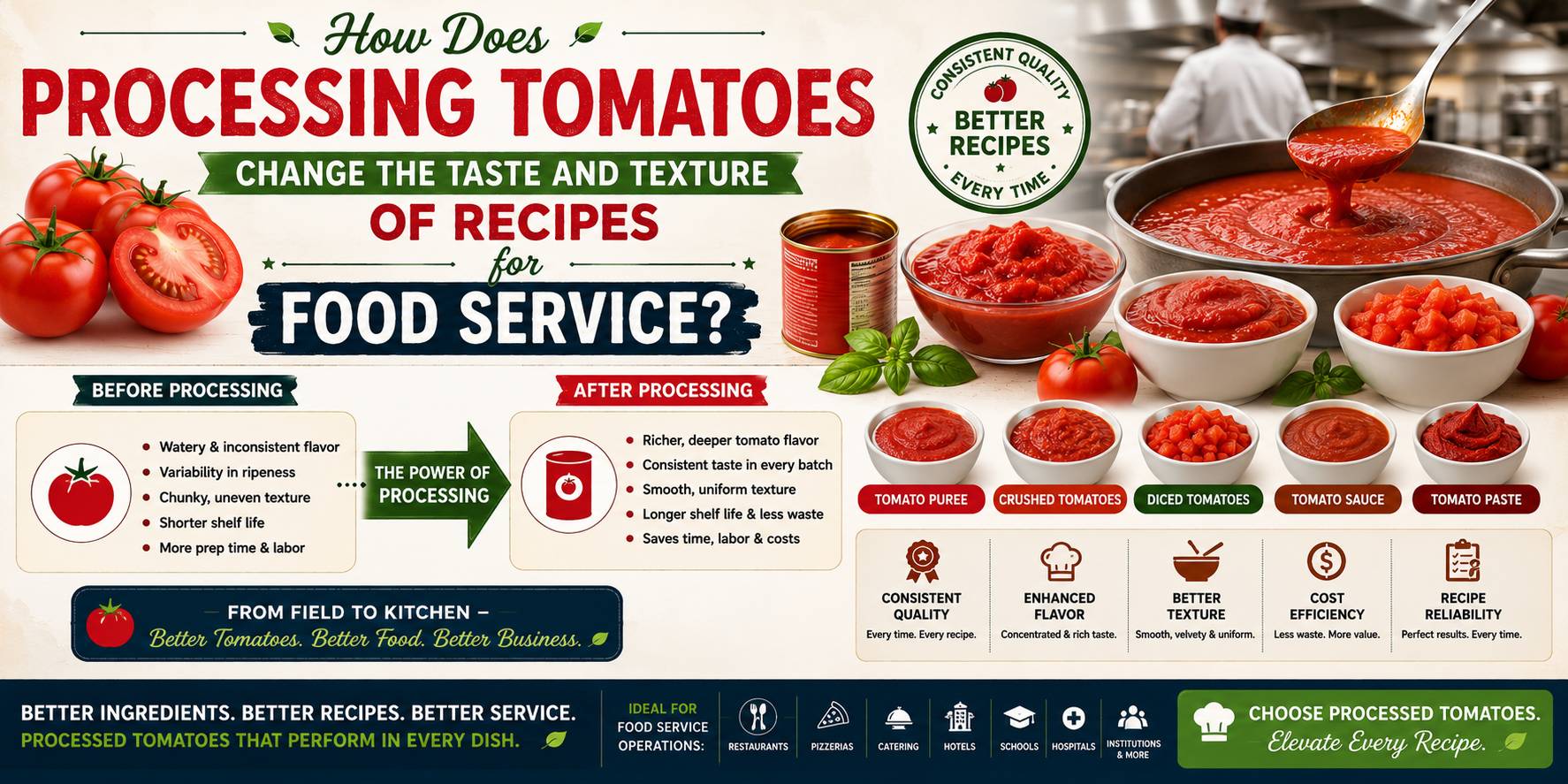
It is in the commercial kitchens, restaurants, caterers, and food industries that people use tomatoes. It is a known truth that the tomato processing impacts the taste, texture, color, and structure of pizza sauces, soups, pasta, and ready-to-eat meals. Therefore always the chefs and food service workers can choose the Best tomato products for restaurants and foodservice for cooking when they understand tomato processing. To a large extent is the Processing procedures affect how effectively food cooks and how satisfied customers are, whether you use chopped tomatoes, puree, or cold break vs. hot break tomato paste.
This guide from JucieDeals shows how processing tomatoes changes the taste and appearance of recipes for food service.
Why processing tomatoes is important in food service?
Ingredients for commercial kitchens need to do the following:
- Same taste every time
- Texture you can trust
- Good performance when cooking
- A long shelf life
- Recipe making on a large scale
Processing tomatoes helps them last longer and improves certain traits that are needed for different food uses.
The way the data is processed can change so many things like how thick something is and if it tastes good, does it have the right Color, Quantity of water and Stability in cooking. It is Picking the right tomato product helps restaurants stick to their recipes and makes the kitchen run more smoothly.
How processing changes the taste of tomatoes?
How tomato goods are heated, concentrated, and stored all have a big effect on their taste. It is the Flavor profiles that are fresh and bright that makes a food delicious and the processing tomatoes at lower temperatures keeps more of their natural acidity and taste. Products that are gently handled often have Better taste
Better smell and a lighter texture that is relished
People often use these items in:
- Fresh sauces
- Light soups with salsa
- Mediterranean food
- Flavors that are rich and cooked
When tomatoes are processed at higher temperatures, their tastes become deeper and more concentrated. Natural enzymes are broken down by heat, which makes the result thicker.
This leads to:
- Better taste
- A little sweetness
- More body
- Less sharp acidity
The best things about these traits are:
- Soup for pizza
- Ketchup and pasta sauce
- Recipes that are cooked slowly
- How processing tomatoes changes the texture
One of the most important things in food service preparation is texture. Different cooking methods give different recipes different consistencies. This selection is important which can be also handled if you manage and Order diced tomatoes in juice online
Tomatoes cut up and in juice
A lot of restaurants order diced tomatoes in juice online because:
- Texture of chunks
- Properly sized water
- Pieces of tomato can be seen
- Looks brand new
These are great for:
- Soups
- Stews, salsa, casseroles, and pasta meals
The juice around the diced tomatoes helps keep the taste and tenderness while they’re cooking.
How to judge between Hot Break Tomato Paste and the Cold Break?
The biggest changes in texture between processing tomatoes the cold way and the hot way is the way they are made and they can make or break the taste of the food. The idea is Cold break vs hot break tomato paste. If there is the Cold Break Tomato Sauce then it is made in Lower temperatures which are used during production in cold break processes.
This method makes:
- A thinner texture
- Tastes like fresh tomatoes
- Less viscosity
This is what cold break tomato paste is good for:
- Sauces that are light
- Drinks with tomatoes
- For recipes that need a real tomato taste
- Tomato Sauce for a Hot Break
Higher temperatures are used in hot break preparation to keep the pectin and make the texture thicker.
This leads to:
- Holds together well
- Feels smooth
- More viscosity
- Better stability when cooking
Tomato paste for hot breaks is often used in
- Sauces for pizza
- Heavy sauces for pasta
- Making ketchup for business
- Recipes for industrial food service
Chefs can choose the right thickness for each menu item by knowing the difference between cold break and hot break tomato paste.