Smoothies are an easy way to get nutrition into a drink that tastes like dessert. Children want bold natural flavors, brilliant colors, and a creamy texture that feels like a delight rather than something “healthy they have to finish.” Frozen fruits help to give all of this without the use of ice, sugar, or artificial syrups. Among the fruit possibilities, frozen mango and berries make a great mix. They provide sweetness, a moderate tang, an appealing color, a thick milkshake-like consistency, and flavors familiar to children who enjoy seasonal Indian fruits and berry-based treats. When ripe, mango has a candy-like flavor, and berries give a light fruity punch without becoming sour like citrus-heavy mixes, so this smoothie foundation is rarely rejected.
Frozen Mango: A Natural Sweetener
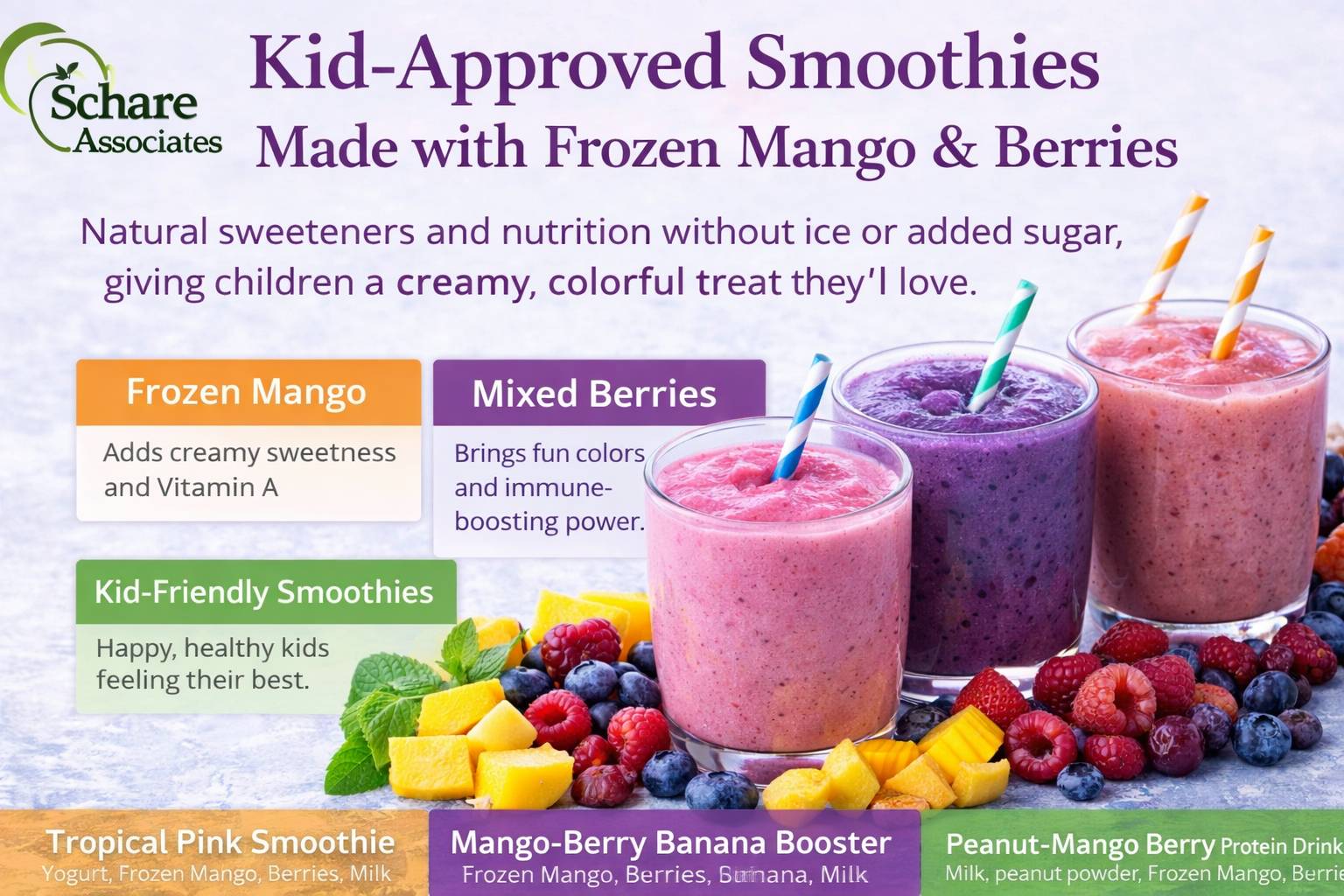
Mango is one of the most popular fruits, and freezing it improves the smoothie game. When blended, frozen mango works as a natural sweet cream, thickening the drink and removing the need for manufactured sugar. It also has Vitamin A, fiber, antioxidants, and immune-boosting micronutrients, which are beneficial during the seasonal winter months and changing weather. The soft, velvety texture perfectly envelopes the package of berries, disguising any strong tang that children might notice if berries were blended alone. Because mango evokes memories of summer flavors, even in winter, it creates a flavor comfort bridge, making smoothies more appealing to younger palates. This is more than just flavor appeal; it’s clever nutrition engineering for young palates.
Mixed Berries: Color and Fun Factor
Parents frequently give berry smoothies to their children in the hopes that they will appreciate them; nevertheless, children sip with their eyes first. Frozen mixed berries add an intriguing pink or purple tinge to the drink, giving it a festive appearance. Berries such as strawberry, blueberry, and black currant are high in Vitamin C, polyphenols, and microminerals, which help with immunity, cognitive function, skin health, and energy metabolism. Even better, when combined with yogurt or fermented milk, berries have anti-inflammatory characteristics and help introduce healthy bacteria, making them an ideal choice for winter school routines when immunity is low and health requires a mild boost.
Kid-Friendly Recipes that Always Win
Here are three dependable frozen mango and berry smoothies made for little morning fuss:
- Tropical Pink Smoothie
Blend together yogurt, frozen mango cubes, mixed berries, and a splash of milk. The end result is a smoothie that tastes like fruit cream.
- Mango-Berry Banana Booster
Frozen mango, berries, and a handful of frozen banana slices combined with warm milk produce a thick milkshake texture with no extra sugar.
- Peanut-Mango Berry Protein Drink
Combine milk, a spoon of peanut powder, frozen mango, and berries. The nutty sweetness complements mango so nicely that the berries just contribute color and flavor.
Health Benefits: Kids don’t realize they are getting
This smoothie mix promotes immunity during viral winters. Benefits of using yogurt bases include increased morning energy, better skin hydration in cold weather, and gastrointestinal comfort. Improved focus during school hours and reduced sugar cravings due to fullness.
Since the sweetness is natural, the colors are lively, and the texture is like a milkshake, kids have no idea this is a health boost disguised as delicious joy.
Key Takeaways
An excellent smoothie is one that children want to drink again and again. Frozen mango provides natural sweetness. Frozen berries provide color, nutrition, and fun. Together, they create a drink that is delicious, predictable, visually appealing, nutritious, and quick to consume. And the best part? Happy, confident children who sip through winter mornings feeling warm, proud, and capable, ready for school, play, and learning with no friction from their clothes or food. When children approve of their drink, parents win their mornings, and winter nutrition transitions from a seasonal difficulty to a family tradition.